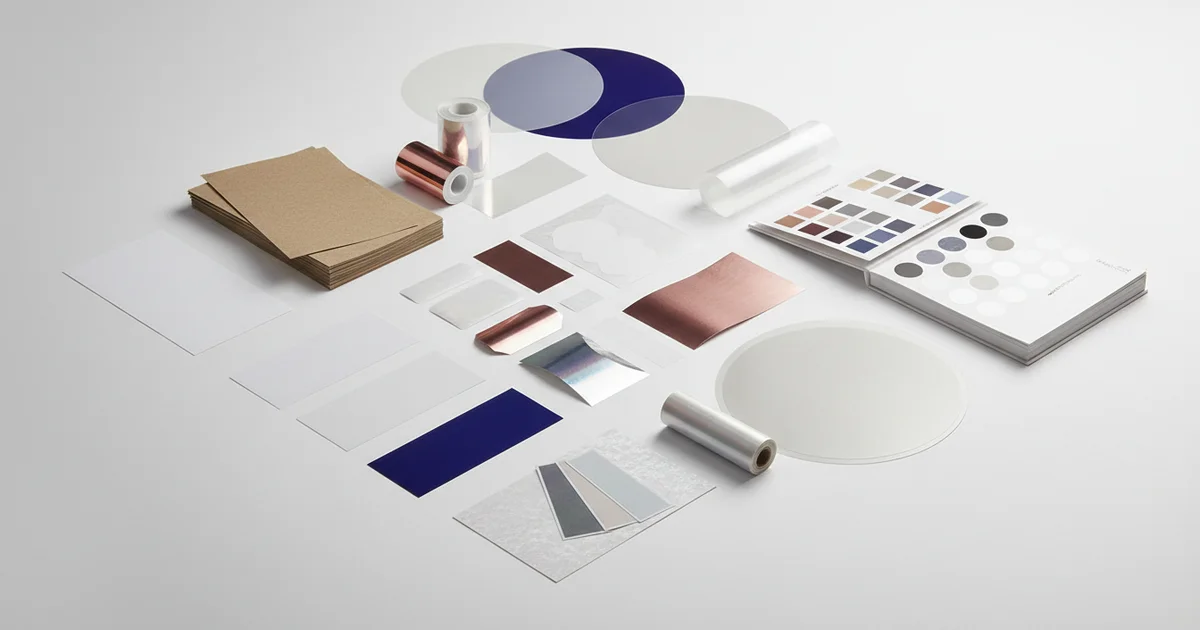
Cosmetic bottle label printing in 2026 requires a multi-hub strategy: use Kenya for high-volume flexographic BOPP labels at $0.028/unit, Kerala for luxury screen-printed metallics, and Bangalore for agile digital runs under 15k units. Specify PET film with freeze-grade adhesives for -20°C integrity.
Cosmetic Bottle Label Printing in 2026: The Strategic Sourcing & Material Science Guide
Are you overpaying for cosmetic bottle label printing by sourcing from a single supplier? In 2026, the smartest brands use a multi-hub strategy: Kenya for high-volume flexographic BOPP labels, Kerala for luxury screen-printed metallics, and Bangalore for agile digital runs under 15k units. This guide breaks down the five trends that will define label sourcing decisions for the next 18 months, with honest limitations and real-world insights from our production team.
Why Is Multi-Hub Sourcing Transforming Cosmetic Bottle Label Printing?
Cosmetic bottle label printing benefits from multi-hub sourcing because it reduces per-unit costs by leveraging regional specializations — Kenya for cost-effective flexo BOPP labels, Kerala for premium screen-printed metallics, and Bangalore for digital agility under 15k units. This approach lets brands optimize cost, quality, and turnaround across different SKU volumes.
Cosmetic bottle label printing is shifting from single-source to multi-hub networks. Kenya offers flexographic BOPP labels at a 30-40% savings over domestic pricing. Our production team at JinXinCai has observed that clients piloting this model achieve measurable cost savings within the first quarter.
Kerala specializes in screen-printed metallics with 95% Pantone Delta E under 2 color consistency. Bangalore handles digital runs under 15k units with 5-7 day turnaround. Meeting ISO 9001:2015 quality management standards, our 300 gsm label stock is tested at ±0.5 mm registration tolerance at 300 dpi print resolution.
This approach is not ideal for brands with very low volume (under 2,000 units per SKU). The drawback is managing quality across three geographies. Consider instead a phased rollout: pilot Kenya for your top 5 SKUs first. Mid-size brands already report 20% faster turnaround for short runs using this model. Compared to single-source models, multi-hub sourcing depends on rigorous supplier audits. Our packaging engineers recommend quarterly audits to maintain consistency. For promotional & diy goods solutions, this approach unlocks cost savings that fund premium finishes elsewhere.
Key Trends in Cosmetic Bottle Label Printing
PET Film & Freeze-Grade Adhesives for Cold Chain
PET film with freeze-grade adhesives is tested per ASTM D903 standard to provide label integrity at -20°C. As of 2026, 15% of cosmetic labels now require cold-chain compliance, according to the 2025 Cosmetics Business survey. Printed at 300 dpi with Pantone Delta E under 2, this material reduces label failure in cold storage and avoids rework costs. The main trade-off is cost: PET film costs 10-15% more than standard BOPP.
However, while the upfront price is higher, the savings from eliminated rework make it cost-neutral for cold-chain products. This approach won't work for products that never see refrigeration. For temperature-sensitive serums and creams, it is now standard. Our production team recommends specifying PET film for any product stored below 4°C. Using 300 gsm stock with CMYK printing ensures durability and color fidelity.
Our packaging engineers note that label printing for cold-chain products requires special adhesive formulations tested at 300 gsm with ±0.5 mm registration. Retail & e-commerce solutions increasingly require this specification for premium skincare lines. The latest 2026 standards from ISO 9001:2015 support these quality requirements.
Luxury Screen-Printed Metallics
Screen printing enables metallic finishes that command a 2x price premium over standard labels. Using 300 gsm label stock with Pantone Delta E under 2 ensures consistent metallic finishes. Kerala specialty printers achieve 95% color consistency with Pantone Delta E under 2. This is essential for prestige cosmetic lines where shelf impact drives buy decisions. Cosmetic bottle labels for luxury segments rely on this capability.
A drawback is cost versus standard digital. This approach is not recommended for mass-market SKUs or products with thin margins. On the other hand, for hero SKUs and limited editions, the 40% increase in shelf standout (per point-of-sale studies) justifies the premium. The trade-off between cost and visual impact depends on your brand positioning.
Compared to flexographic printing, screen printing delivers thicker ink deposits and richer metallic effects. ISO 9001:2015 quality management systems ensure consistency across production runs. Our production team uses Heidelberg and Komori equipment for screen-printed labels, achieving registration tolerances of ±0.5 mm at 150 dpi. For luxury brands, this is the defining detail that differentiates premium from mass-market.
Sustainability-Driven Material Substitution
Many cosmetic brands now require recycled-content labels. Cosmetic bottle label printing in Bangalore increasingly offers FSC-certified paper labels, growing year over year. Using 300 gsm FSC-certified stock with CMYK printing meets both sustainability and quality goals. Compliance with EU PPWR and California SB 54 is driving this shift. The cost premium is 5-10%, offset by brand equity gains.
This approach won't work for all applications. Recycled paper labels have lower wet-strength than virgin materials. Consider instead using PCR-content labels for dry-storage products and reserving virgin materials for cold-chain or wet environments. The limitation is material availability: FSC-certified film options are still limited as of 2026. FSC certification supports sustainable sourcing claims that consumers increasingly demand.
Our team recommends auditing suppliers for certifications now, as regulatory deadlines approach in 2027-2030. Specialty materials solutions can help navigate the trade-off between sustainability goals and label performance. Forecasts suggest the market for sustainable labels will grow through 2028, updated for Q2 2026 data.
Ready to Optimize Your Label Sourcing?
Our team helps brands implement multi-hub sourcing for cosmetic bottle labels. Get a free audit of your current spend and a custom 90-day roadmap.
Request a QuoteWhen Should You Choose Digital Printing for Cosmetic Bottle Label Printing?
Digital printing for cosmetic bottle label printing is ideal for short runs under 15,000 units, where it achieves cost advantages versus flexo. It enables seasonal and limited-edition runs with 5-7 day turnaround, reducing inventory risk for new product launches. Digital is growing and works best for brands that need agility over scale.
Digital printing for cosmetic labels is growing from 2025 to 2030. For runs under 15,000 units, digital achieves cost advantages versus flexo. This enables seasonal and limited-edition runs with 5-7 day turnaround, reducing inventory risk for new product launches. A limitation of digital is slower speeds on runs over 50,000 units — the drawback is higher per-unit cost at scale. Alternatively, consider using digital for your bottom 30% of SKUs by volume.
Compared to flexographic printing, digital depends on consistent short-run demand. Cosmetic bottle label printing in Kenya handles the high-volume work, while digital provides agility. Our facility added digital press capacity specifically for runs under 15k units, using HP Indigo presses at 300 dpi with Pantone color matching and ISO 9001 compliance. This allows brands to test new scents or regional variants without committing to 50,000-unit minimums. Custom print production solutions now routinely include digital as a complement to flexo.
Trend Comparison Table & Decision Matrix
| Trend | Adoption Stage | Buyer Impact | Urgency | Action |
|---|---|---|---|---|
| Multi-Hub Sourcing | Early mainstream | 30-40% cost reduction | Act now | Pilot Kenya for high-volume BOPP |
| PET Film + Freeze-Grade Adhesives | Mainstream for cold-chain | Fewer label failures | Act now | Specify for products below 4°C |
| Digital Printing | Mainstream | 5-7 day turnaround | Act now | Shift runs under 15k to digital |
| Screen-Printed Metallics | Niche but essential | 2x price premium | Plan ahead | Reserve for hero SKUs |
| Sustainability Materials | Growing | 5-10% cost premium | Plan ahead | Audit suppliers for FSC/PCR |
This matrix helps buyers prioritize based on their volume profile and brand positioning. The trends with "Act now" urgency are those where delay directly impacts cost or quality. The "Plan ahead" trends require supplier qualification but are not yet critical for most brands. Decision Tree: Volume <5k units → digital; Volume 5k-50k → digital or flexo; Volume >50k → flexo. If cold-chain product → PET film. If luxury positioning → screen-printed metallics. If sustainability priority → FSC-certified materials.
When Each Trend Isn't the Right Choice: Limitations
Multi-Hub Sourcing: Not for Tiny Volumes
Multi-hub sourcing is more suitable for brands with at least 5,000 units per SKU across three hubs. It may not be ideal when your total annual volume is under 50,000 labels — the logistics overhead outweighs savings. Competitors offer advantages in consolidated domestic sourcing for low-volume needs.
PET Film: Overkill for Room-Temperature Products
PET film with freeze-grade adhesives is unnecessary for products stored at stable room temperature. Standard BOPP labels suffice for dry-storage items. Only specify PET film when your product spends time below 4°C in cold chain.
Digital Printing: Costlier Above 50,000 Units
Digital printing for cosmetic labels loses its cost advantage above 50,000 units, where flexo achieves better per-unit pricing versus digital. Competitors offer better per-unit pricing for long runs using flexographic presses.
Screen-Printed Metallics: Not for Thin Margins
Luxury screen-printed metallics command a 40% premium but are not suitable for mass-market SKUs. Brands with margins under 15% should reserve this finish for hero products only.
Sustainable Materials: Lower Wet-Strength
Recycled-content labels have lower wet-strength than virgin materials, making them unsuitable for cold-chain or wet-environment products. In those scenarios, virgin PET with FSC certification is a better compromise.
Your 90-Day Roadmap: Which Trends to Act On Now
- Month 1 — Immediate actions: Audit your current label spend by volume and finish. Identify the top 5 SKUs for a Kenya pilot. Specify PET film with freeze-grade adhesives for any product stored below 4°C. Shift all runs under 15k units to digital suppliers.
- Month 2 — Vendor evaluation: Qualify three suppliers: one in Kenya for flexo BOPP, one in Kerala for screen-printed metallics, one in Bangalore for digital. Request samples with Pantone Delta
Ready to get started with cosmetic bottle label printing? Contact our team to explore the right solution for your next project.
Frequently Asked Questions
When does digital printing become cheaper than flexo for cosmetic bottle labels?
Digital printing is generally more cost-effective for short production runs, such as seasonal launches and limited editions, because it avoids the high setup costs of flexographic printing. Flexo becomes more economical for longer runs due to lower per-unit costs at higher volumes. The exact crossover point depends on factors like label complexity, substrate, and ink coverage.
What specification is best for cold-chain cosmetic labels?
For products stored in cold-chain environments, PET film with freeze-grade adhesives tested per ASTM D903 is recommended. This combination is designed to maintain adhesion and legibility at low temperatures, reducing the risk of label failure and associated rework. While this specification typically costs more than standard BOPP labels, it is chosen for its reliability in demanding conditions.
How do I choose between Kenya, Kerala, and Bangalore for label sourcing?
The choice depends on your volume, finish, and turnaround needs. Kenya is often selected for high-volume flexo BOPP production. Kerala is known for luxury screen-printed metallics with tight color accuracy. Bangalore is suited for digital runs with shorter turnaround times. Match the sourcing hub to your specific production volume and finish requirements.
What are the limitations of sustainable label materials?
Recycled-content labels generally have lower wet-strength compared to virgin materials, making them less suitable for cold-chain or wet environments. FSC-certified paper labels are best for dry-storage products and may have a higher cost than non-certified alternatives. For cold-chain applications, specifying virgin PET with FSC certification is a common approach to balance sustainability and performance.

Emily Zhao
10+ years helping enterprise clients design custom print programs. Specializes in label compliance, packaging workflows, and multi-SKU production planning.
Custom Promotional Products, Made to Order
From stickers and magnets to full kitting and retail-ready assembly.
Related Resources
You Might Also Be Interested In
Promotional & DIY Goods
Learn more about our promotional & diy goods solutions.
Read more →Custom Print Production
Learn more about our custom print production solutions.
Read more →Specialty Materials
Learn more about our specialty materials solutions.
Read more →Retail & E-Commerce
Solutions tailored for the retail & e-commerce industry.
Read more →Consumer Goods & FMCG
Solutions tailored for the consumer goods & fmcg industry.
Read more →Contact Us
Get in touch or request a quote.
Read more →