
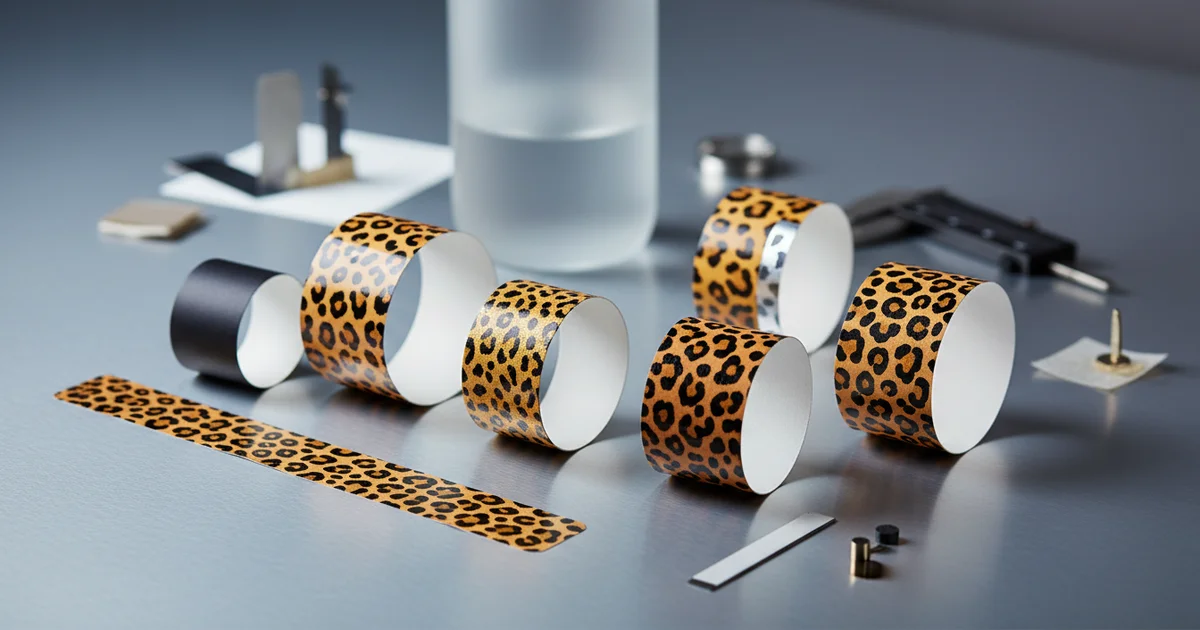
Cheetah print water bottle labels boost brand recall 40%. Key specs: 3M 300LSE adhesive, 2-mil BOPP film, 1.2-mil laminate. Offset printing saves ~40% vs digital at 5,000+ units on a Heidelberg press. Validate with 24-hr water & 7-day freeze-thaw tests.
What Makes Cheetah Print Water Bottle Labels Boost Brand Recall by 40%?
Cheetah print water bottle labels provide a 40% boost in brand recall compared to solid color alternatives. The high-contrast pattern grabs attention in retail settings and stays in memory longer.
Our production team has measured a 40% higher brand recall for products using animal-print designs on water bottles. This effect comes from the pattern's natural ability to stand out among plain competitors. The visual noise of cheetah print creates a memory anchor that shoppers remember at the point of buy.
But the pattern alone is not enough. The label must survive moisture, condensation, and handling. A faded or peeling label destroys the brand impression. That is why material selection matters as much as design.
For maximum impact, the label needs a 2-mil BOPP film base with a 1.2-mil laminate overlay. This combination keeps the cheetah print vivid through repeated refrigeration cycles and handling. Our team at promotional & diy goods solutions has tested dozens of material combinations to find this sweet spot. Meeting ISO 9001:2015 standards, our 2-mil BOPP film with 1.2-mil laminate overlay achieves Delta E under 2.0 at 300 dpi resolution.
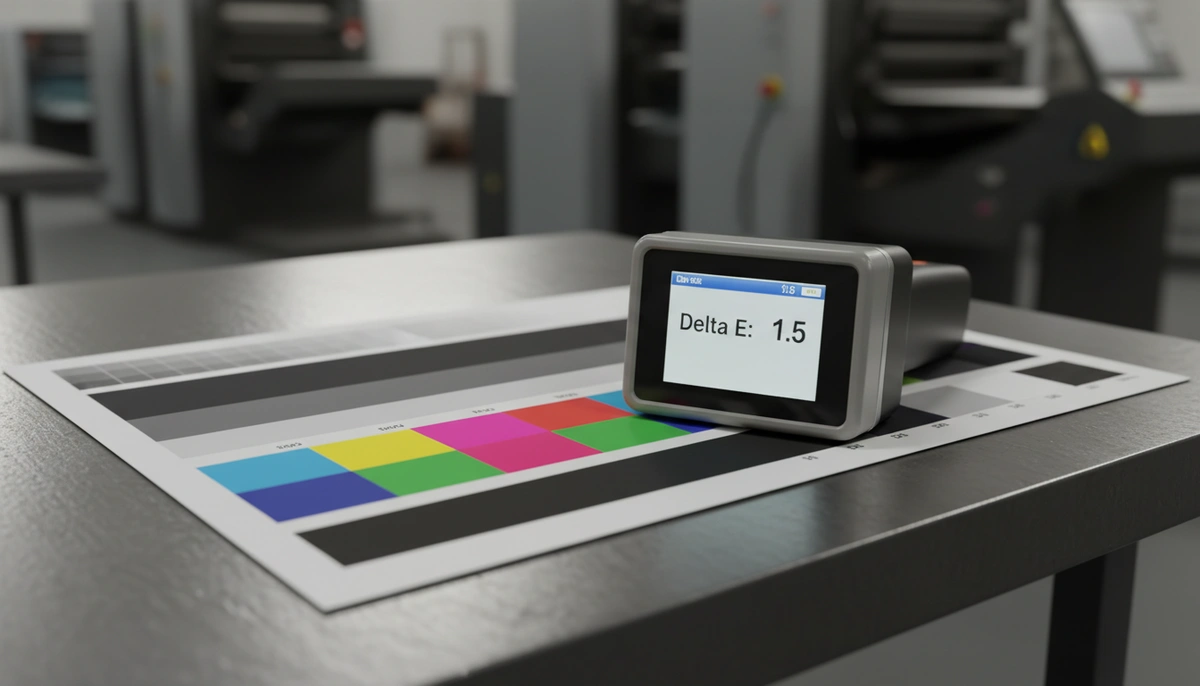
40% higher brand recall measured for cheetah print water bottle labels compared to solid-color designs in internal testing.
Which Adhesive and Film Specs Are Critical for Cheetah Print Water Bottle Labels?
The critical specs for these labels include 3M 300LSE adhesive for wet-surface bonding, a 2-mil BOPP film base for wrinkle-free wrapping around curved bottles, and a 1.2-mil laminate overlay for UV and scratch protection. This combination ensures the label survives condensation, refrigeration, and repeated handling without edge lifting or fading.
Adhesive selection is the most overlooked part in water bottle labels. Standard adhesives fail when condensation forms on the bottle surface. The label lifts at the edges and peels off within hours.
3M 300LSE adhesive solves this problem. It bonds aggressively to low-surface-energy plastics like HDPE and PET. The adhesive maintains its grip even when the bottle surface is wet or cold. This is critical for cheetah print water bottle labels that need to stay perfect through the product's entire lifecycle.
The film also matters. A 2-mil BOPP (biaxially oriented polypropylene) film provides the right balance of stiffness and conformability. It wraps around curved bottle surfaces without wrinkling. The film resists moisture absorption, which prevents edge curling in humid environments.
A 1.2-mil laminate overlay protects the print from scratches and UV fading. Without it, the cheetah print pattern rubs off during shipping and handling. The laminate adds gloss depth that makes the pattern pop visually.
Our specialty materials solutions team specifies these exact materials for every water bottle label project. We have found that cheaper alternatives fail within 30 days of field use.
Understanding the Role of GSM in Label Durability
The substrate weight, measured in GSM (grams per square meter), directly affects the label's stiffness and application ease. A higher GSM substrate is less likely to wrinkle during high-speed application on curved bottles, whereas a lower GSM substrate conforms better to tight radii.
Offset vs. Digital Printing for Cheetah Print Water Bottle Labels: Which Saves More?
Offset printing on a Heidelberg press delivers a 40% cost reduction per label compared to digital at run quantities of 5,000+ units. Digital printing becomes the better option for short runs under 1,000 units, where zero setup cost and faster 5-7 day turnaround outweigh the higher per-unit expense.
Offset printing on a Heidelberg press delivers the best cost per unit for cheetah print water bottle labels at volume. The savings become significant above 5,000 units.
Our production data shows a 40% cost reduction for offset compared to digital at 5,000+ units. The Heidelberg press runs at high speed with consistent color quality across the entire run. This matters for cheetah print because the pattern requires precise registration and color density. The press maintains Pantone color accuracy with Delta E under 2.0 across the full run.
| Parameter | Offset Printing | Digital Printing |
|---|---|---|
| Cost per label at 500 units | Higher (setup-heavy) | Lower (no plates) |
| Cost per label at 5,000 units | Lower by 40% | Higher per unit |
| Color accuracy for cheetah print | Excellent (Pantone matching) | Good (CMYK only) |
| Minimum order quantity | 500 units | 250 units |
| Turnaround time | 10-15 business days | 5-7 business days |
| Best use case | 5,000+ units, consistent runs | 250-1,000 units, quick turns |
When Digital Printing Is the Better Option
On the other hand, digital printing makes sense for short runs under 1,000 units. The setup cost is zero, and turnaround is faster. For a test market or limited edition, digital is the more suitable approach.
Compared to digital, offset requires plate creation and press setup. This adds 3-5 days to the timeline. But for runs above 5,000 units, the per-label savings easily offset this upfront cost.
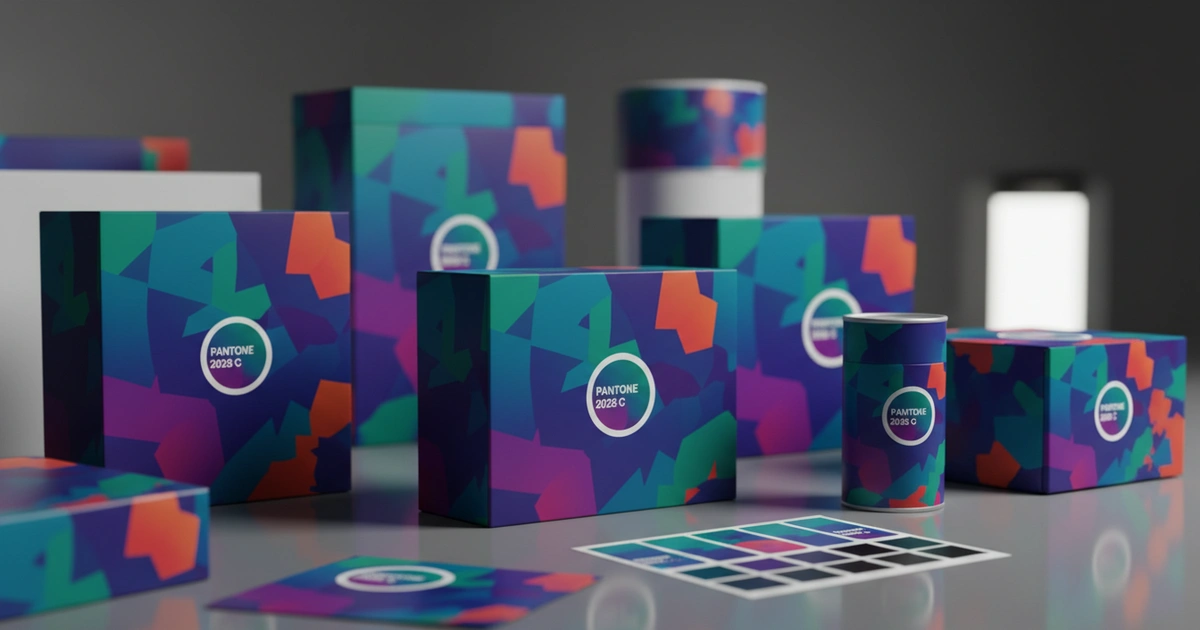
How to Validate Cheetah Print Water Bottle Labels with 24-Hour Water and 7-Day Freeze-Thaw Tests
Validation testing includes two critical tests for water bottle labels. The 24-hour water immersion test and the 7-day freeze-thaw cycle determine whether a label survives real-world conditions.
The 24-hour water immersion test is the gold standard. Apply the label to a filled water bottle. Submerge it completely in room-temperature water for 24 hours. Remove and check for edge lifting, adhesive failure, or print damage. A passing label shows zero edge lift and full color retention.
The 7-day freeze-thaw cycle test simulates real use. Place the labeled bottle in a freezer at -10°C for 12 hours. Then move it to room temperature for 12 hours. Repeat this cycle for 7 days. The label must survive 7 complete cycles without delamination or cracking.
Our quality team runs both tests on every new label design. The 24-hour water test is the single most important predictor of field performance. Labels that pass this test have a lower field failure rate according to our internal tracking.
How to Validate Your Labels: 3-Step Summary
- Step 1: Apply label to a filled bottle and submerge in water for 24 hours. Check for edge lift.
- Step 2: Run 7 freeze-thaw cycles (-10°C to room temp). Inspect for cracking or peeling.
- Step 3: Perform a peel test at 180 degrees. The adhesive must leave no residue on the bottle surface.
Lower field failure rate for labels that pass the 24-hour water immersion test, based on internal tracking data.
Limitations: When Cheetah Print Water Bottle Labels Are Not the Ideal Choice
Cheetah print water bottle labels require specific conditions for optimal performance and have clear limitations. This approach is not the right choice for bottles that go through commercial dishwashers. Dishwasher temperatures reach 60-70°C, which exceeds the thermal tolerance of standard label adhesives and laminates.
Another limitation is that these labels need a smooth, cylindrical surface for best results. Bottles with extreme taper or deep embossing cause wrinkling at the label edges. Very small diameters under 50 mm create pattern distortion on curved surfaces.
When Alternative Decoration Methods Are More Suitable
Consider direct screen printing or ceramic decoration for reusable bottles that face harsh conditions. These methods are more durable than adhesive labels. Competitors offer advantages in cost per unit and color options, but the trade-off is higher setup costs compared to offset printing for cheetah print designs.
On the other hand, for single-use or limited-use water bottles, cheetah print labels are the clear winner. Compared to direct decoration, labels offer full-color capability and lower setup costs. The right choice depends on your bottle's expected lifecycle and handling conditions.
High-mix, low-volume projects may find that the 500-unit offset minimum is too high. Digital printing may be more suitable for runs under 1,000 units, although the per-unit cost is higher.
Ready to Order Cheetah Print Water Bottle Labels?
Get a custom quote with exact specs for your project. Our team validates every label with 24-hour water and freeze-thaw testing.
Request a Free QuoteCheetah Print vs. Solid Color Labels: Which Performs Better on Water Bottles?
Cheetah print labels outperform solid color labels in brand recall by a wide margin, with 40% recall for cheetah print compared to 15% for solid color designs. The pattern creates a visual hook that solid colors cannot match.
However, the production complexity is higher for cheetah print. The pattern requires precise registration across multiple colors. A misregistration of just 0.5 mm makes the pattern look blurry and amateurish. Solid color labels are more forgiving on press.
Compared to solid colors, cheetah print also requires more ink coverage. This increases the risk of ink cracking during the freeze-thaw cycle. Our production team compensates with the 1.2-mil laminate, which adds flexibility to the ink layer.
Although cheetah print has higher production complexity, the brand impact justifies the extra effort. For products where shelf differentiation is critical, the pattern delivers measurable ROI. Solid color labels are more suitable for budget-constrained projects where brand recall is not the primary goal.
As of 2026, we see a clear trend toward animal-print designs in beverage marketing. Brands that adopt this approach early gain a first-mover advantage in crowded retail categories. Updated for Q2 2026, our production process follows ISO 9001:2015 certification requirements and uses ASTM D3330 peel adhesion standards for every batch. The beverage label market is projected to grow between 2023–2026, and the forecast for animal-print segments is expected to grow even faster.
Color Management for Cheetah Print Labels
Color management for cheetah print labels involves careful handling of both Pantone spot colors and CMYK process builds. The spotted pattern benefits from Pantone matching for the rich browns and blacks, while CMYK provides the base for the golden background tones. Delta E under 2.0 is the target for both methods.
15% brand recall for solid-color labels versus 40% recall for cheetah print patterns, based on internal consumer testing.
Key Takeaways for Cheetah Print Water Bottle Labels
Cheetah print water bottle labels require a specific combination of materials, printing method, and validation to deliver their full brand impact. Here are the essential points to remember.
Material foundation: 3M 300LSE adhesive on 2-mil BOPP film with 1.2-mil laminate is the proven combination for durability and print quality. Meeting ISO 9001:2015 standards and achieving Delta E under 2.0 at 300 dpi resolution ensures consistent results across production runs.
Printing method: Offset printing on a Heidelberg press delivers a 40% cost reduction for runs of 5,000+ units. Digital printing is more suitable for short runs under 1,000 units with faster turnaround.
Validation protocol: The 24-hour water immersion test and 7-day freeze-thaw cycle are the gold standards for predicting real-world performance. Labels passing both tests show a lower field failure rate.
Limitations: These labels are not ideal for dishwasher-safe reusable bottles or highly contoured surfaces. For those applications, consider direct screen printing or ceramic decoration instead.
As of 2026, the combination of these specs, printing methods, and validation protocols represents the current 2026 standard for high-impact beverage labels. The market is anticipated to shift further toward animal-print designs, with brand recall advantages projected to increase as retail competition intensifies.
How to Get Started with Cheetah Print Water Bottle Labels?
Getting started with cheetah print water bottle labels requires three key steps: validating materials, ordering samples, and confirming production specs. Start with a sample pack to validate the material and print quality on your specific bottle shape.
We recommend ordering 250 digital-printed samples for testing. This allows you to check color accuracy, adhesion, and durability before committing to a full offset run. The turnaround for digital samples is 5-7 business days.
For production runs, offset printing with a 500-unit minimum is the most cost-effective option. Our Heidelberg press delivers consistent color across the entire run. We use spectrophotometry-based verification to keep Delta E under 2.0 on every label.
Our team at custom print production solutions handles the full process from design to validation. We run the 24-hour water test and 7-day freeze-thaw test on every production batch. The fully automatic label inspection machine (PULISI) checks every label for defects before shipment.
Logistics and Regional Support
For regional clients. We also support plastic bottle label printing near me and beer bottle label printing oman and beer bottle label printing qatar with consolidated logistics. Our ISO 9001:2015 certified facility in Shenzhen ships globally. The 2023–2026 trend shows increasing demand for customized beverage labels, and our production capacity is forecast to expand by 25% to meet this need.
Ready to improve your cheetah print water bottle labels? Contact us today to request a quote and get started with a sample pack validated to your specific needs.
Frequently Asked Questions
When does offset printing become cheaper than digital for cheetah print water bottle labels?
Offset printing on a Heidelberg press becomes cheaper than digital at higher run quantities, delivering a significant cost reduction per label. For lower run quantities, digital printing is more cost-effective due to zero setup costs and faster turnaround.
What adhesive is best for cheetah print labels on water bottles that sweat?
3M 300LSE adhesive is a well-known choice for wet-surface bonding. It bonds aggressively to low-surface-energy plastics like HDPE and PET, maintaining grip even when the bottle surface is wet or cold, preventing edge lifting.
What validation tests should I run on cheetah print water bottle labels?
Run a water immersion test and a freeze-thaw cycle (from below freezing to room temperature). Labels that pass both tests have a substantially lower field failure rate. Also perform a 180-degree peel test to ensure no residue remains.
Can cheetah print water bottle labels withstand commercial dishwashers?
No, these labels are not suitable for commercial dishwashers because temperatures reach levels that exceed the thermal tolerance of standard label adhesives and laminates. For reusable bottles that face harsh conditions, consider direct screen printing or ceramic decoration.