A 4.8% CAGR signals flexo's dominance in packaging, but choosing the wrong supplier can cost you 15% in waste and compromise brand consistency. This guide details how to evaluate partners and optimize costs.
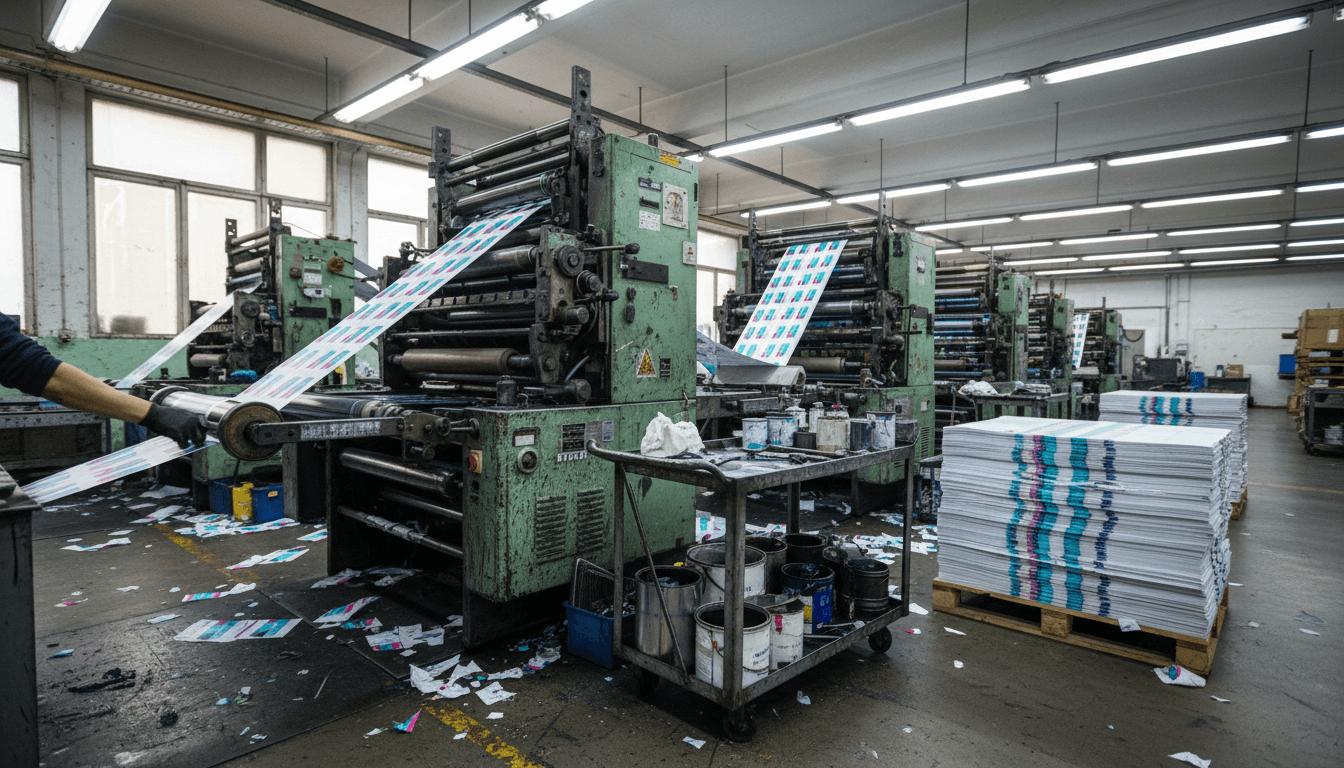
Your new product launch is six weeks out. The packaging samples from your flexographic printing services supplier just arrived, and the colors are 20% off-brand. The supplier blames your artwork, but you know your Pantone spec was correct. Now you face a costly re-plate, a delayed launch, and a potential 15% waste factor on the first production run. This scenario is not an anomaly; it's the direct result of choosing a supplier based on price per unit alone, without understanding the technical rigor required for consistent, high-volume flexo output.
- Flexographic printing's 4.8% CAGR is driven by its speed and material versatility, but its true value lies in cost-effectiveness for runs over 50,000 units.
- Print repeatability—ensuring the millionth box matches the first—is the single most critical metric for brand consistency and is determined by prepress and press calibration.
- Up to 30% of total project cost can be hidden in prepress (plate making, color management) and setup, not the per-unit price.
- Water-based and UV-curable inks have distinct applications; selecting the wrong one for your substrate can lead to adhesion failure or compliance issues.
- A supplier's investment in G7 color calibration and CTP (Computer-to-Plate) technology is a stronger indicator of quality than the age of their press.
What is Flexographic Printing and How Does the Flexographic Printing Process Work?
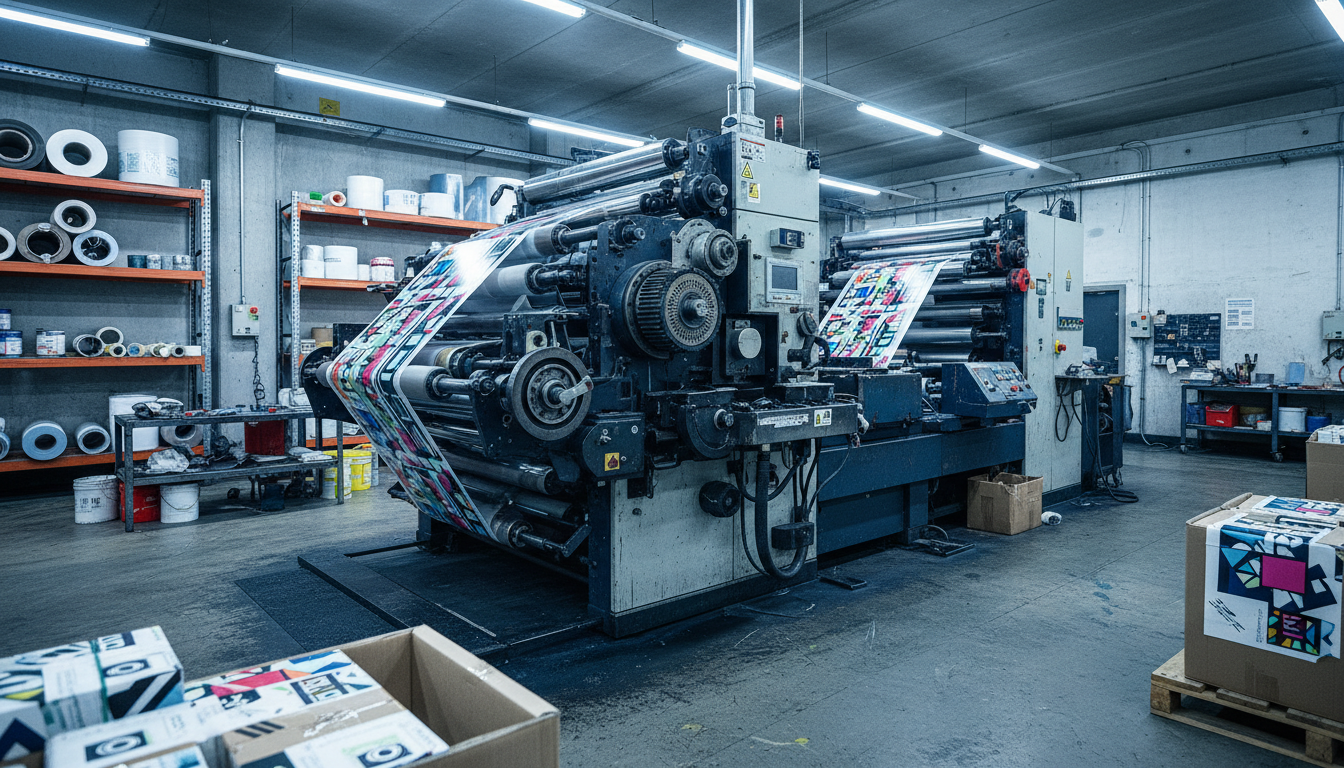
Flexographic printing is a high-speed, rotary printing process that uses flexible photopolymer plates to transfer ink onto a wide variety of substrates. It excels in long runs on non-porous materials where other methods falter. The process begins with digital artwork that is separated into colors and used to create a raised-image photopolymer plate for each color. These plates are mounted onto cylinders on the press. An anilox roll, a laser-engraved cylinder with microscopic cells, meters a precise amount of ink onto the plate. The plate then rolls against the substrate—whether corrugated board, flexible film, or label stock—to deposit the ink. Modern presses often integrate in-line finishing like die-cutting, laminating, or sheeting, consolidating multiple production steps.
What Are the Key Advantages of Flexo for Packaging and Labels?
Flexographic printing delivers unmatched efficiency and versatility for volume packaging. Its primary advantages are speed, material compatibility, and integrated production. A modern flexo press can run at over 2,000 feet per minute, making it the fastest commercial printing method for packaging. It handles a vast range of substrates—from delicate films and foils to thick corrugated board—that are challenging for offset printing services. The ability to use water-based, solvent-based, or UV-curable inks allows for tailoring to specific durability and compliance needs, such as food-safe packaging. Furthermore, the process is designed for efficiency; in-line finishing capabilities mean a roll of film can be printed, laminated, die-cut, and rewound in a single pass, dramatically reducing labor and handling time compared to multi-step processes.
"The biggest shift in the last decade isn't the press speed, it's the digital front end. Prepress for flexo now demands the color science of offset to achieve brand-matching repeatability across global production facilities." – Senior Packaging Technologist
Flexographic vs. Digital Printing: Which is Right for My Project?
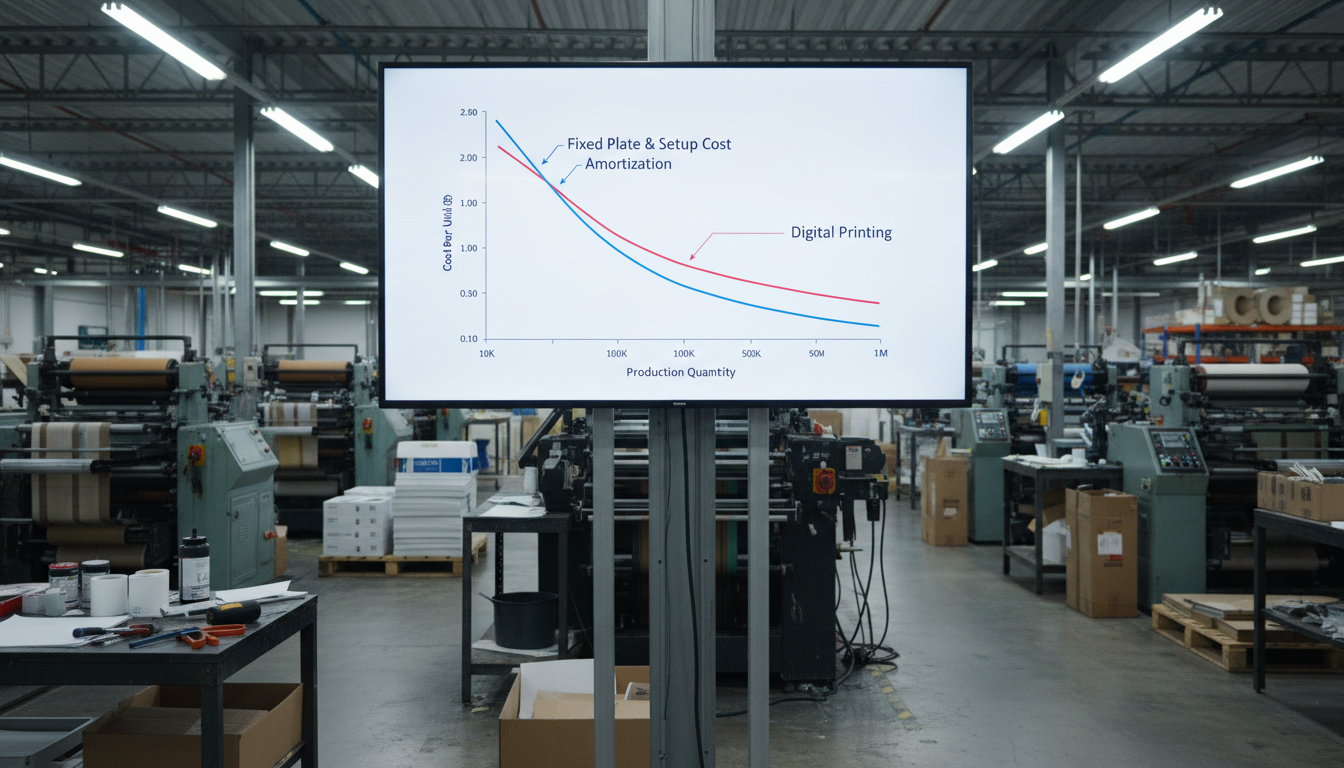
Choose flexographic printing for cost-effective, high-volume production with stringent brand color requirements. Choose digital for ultra-short runs, extreme versioning, or when speed-to-market for a pilot outweighs unit cost. The flexographic vs digital printing debate centers on volume and variability. For runs under 5,000 units, digital often wins on cost by eliminating plate charges and setup. However, the unit cost curve crosses dramatically. For a run of 100,000 labels, the flexo printing cost per unit can be 60-70% lower than digital. Flexo also provides superior ink opacity on challenging substrates and, with modern platemaking, can match brand colors (like Pantone) with greater accuracy and consistency across the entire run. Digital excels at variable data and last-minute changes, but for sheer volume and material flexibility, flexo is the industrial workhorse.
What Materials and Inks Define Modern Flexographic Printing?
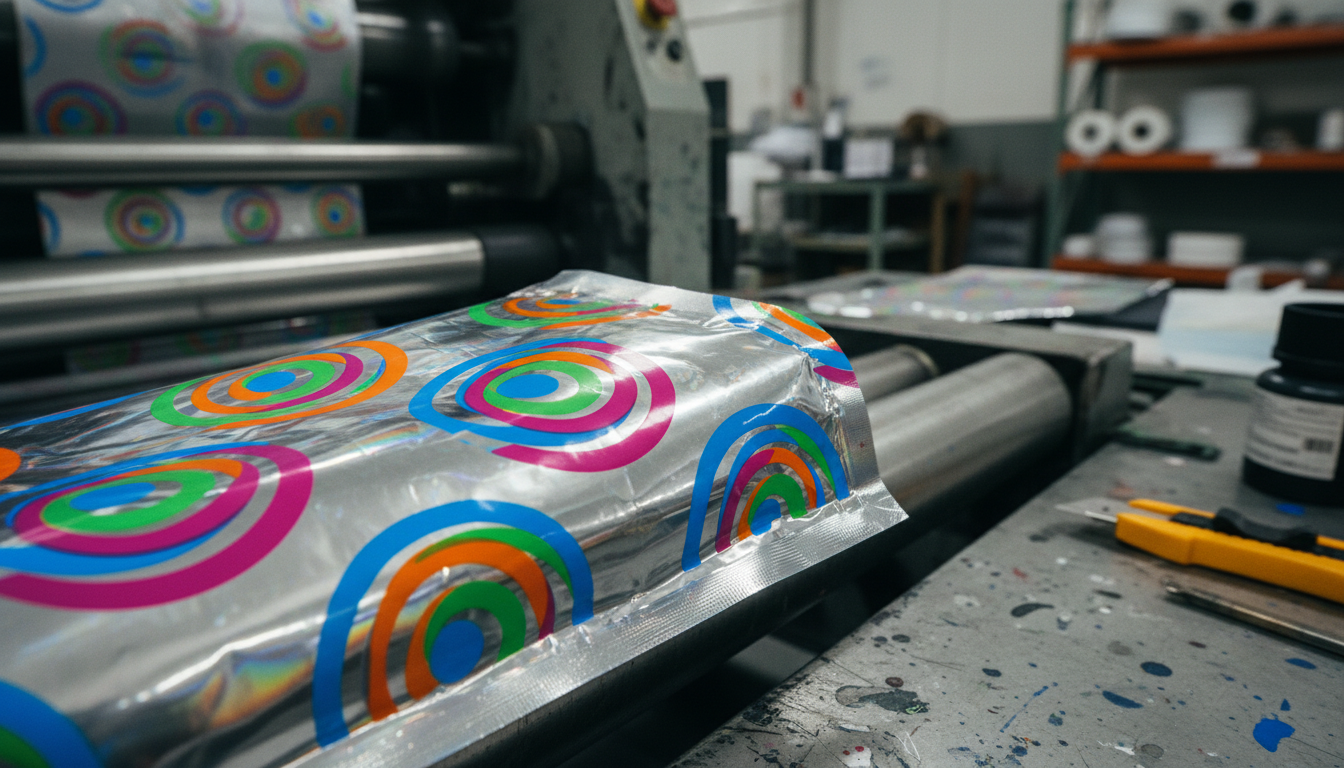
The material and ink selection directly determines the functionality, compliance, and shelf appeal of the final package. Flexographic printing is uniquely capable of printing on extensible, non-absorbent materials. Common substrates include polyethylene (PE), polypropylene (OPP, BOPP), polyester (PET), paper label stock, and corrugated liners. Ink technology is equally critical. Water-based inks are dominant for porous substrates like paper and are preferred for their environmental profile. UV flexo inks are cured instantly with UV light, offering superior abrasion resistance and vibrancy on films and foils, and allowing for immediate downstream processing. For food packaging, compliance is paramount; inks must be formulated to meet FDA 21 CFR or EU 10/2011 regulations for indirect food contact. The choice between a CI press (ideal for thin, stretchy films) and a stack press (better for thicker, non-stretch materials) is often dictated by the substrate.
How to Strategically Evaluate a Flexographic Packaging Supplier
Look beyond the pressroom to the prepress department and quality control protocols. The most expensive press cannot compensate for poor plate-making or color management. When evaluating flexographic packaging suppliers, audit their prepress workflow first. Do they use CTP (Computer-to-Plate) technology with flat-top dot plates for consistent ink transfer? Is their proofing system G7 calibrated to predict final press output accurately? Manufacturers like JinXinCai Printing offer G7-calibrated contract proofing that catches color drift before a single plate is made. Next, examine their press capabilities: do they have both CI press and stack press configurations to match your substrate? Finally, request data on their historical print repeatability—measured by delta-E values across production batches. A reliable partner should provide this data transparently.
Send us your most challenging brand color and substrate. We'll run a no-obligation print trial and provide a delta-E repeatability report from our G7-calibrated flexo line.
Get a Free Quote →What is the Real Cost Structure for Flexo Printing?
The true flexo printing cost per unit is a sum of fixed setup costs and variable running costs, with setup amortized over the total quantity. Focusing solely on the per-unit quote is misleading. Fixed costs include: digital prepress (file preparation, color separation), photopolymer plate making (one set of plates per design, often the largest upfront cost), and press setup (mounting plates, ink mixing, web threading). These costs are incurred regardless of run length. Variable costs include substrate, ink, and press time. Therefore, a run of 10,000 units might have a unit cost of $0.25, while a run of 500,000 of the same item could drop to $0.07 per unit, as the fixed costs are spread thin. Always request a cost breakdown to understand where your money is going and to identify optimization opportunities, such as gang-running multiple SKUs.
Case Study: A Beverage Brand's Switch to Flexo
A national iced tea company was using offset for their 500,000-run paperboard cartons but faced challenges with ink adhesion and slow turnaround due to offline coating. They partnered with a flexo supplier specializing in custom flexographic labels and packaging. The supplier recommended a switch to a high-performance water-based ink system and a CI press with in-line aqueous coating. The result: a 22% reduction in total cost, a 30% faster production cycle due to in-line finishing, and superior scuff resistance. The key was the supplier's expertise in prepress for flexo, optimizing the dot gain curves for the specific board stock to maintain vibrant color reproduction.
How to Prepare Artwork for Reliable Flexographic Printing
Successful flexographic printing starts with artwork engineered for the process, not just adapted from a digital file. Key prepress considerations include color management, trapping, and file construction. Provide vector-based artwork (Adobe Illustrator) with all fonts outlined and linked images at a minimum of 300 DPI. Crucially, design with the limitations of the anilox roll and plate distortion in mind: avoid ultra-fine serif fonts below 6pt and hairlines thinner than 0.25pt. Use rich black (a mix of CMYK) instead of 100% K for large areas. Your supplier's prepress team should then perform color separation, adjust for print repeatability by compensating for dot gain on the specific substrate, and create a production-proof. This step is where many marketing agency print services projects fail—by not involving the printer's prepress experts early enough.
of flexographic print defects originate in prepress, not on the press.
Frequently Asked Questions
How does flexographic printing affect the durability of packaging?
Flexo significantly enhances durability when paired with the correct ink system. UV-curable flexo inks provide a hard, polymerized surface that is highly resistant to abrasion, moisture, and chemicals, making them ideal for shipping cartons or outdoor product labels. For flexible packaging, the ink is often trapped between film layers via lamination, protecting it entirely from wear.
What should I look for when choosing a flexographic ink for food packaging?
First, verify compliance certifications. The ink manufacturer must provide documentation proving the formulation meets FDA 21 CFR Part 175.300 (US) or EU 10/2011 (Europe) for indirect food contact. Second, work with your supplier to test ink adhesion and resistance properties on your specific film or paper substrate under conditions it will face, such as refrigeration or freezer storage.
How does print repeatability in flexo impact my brand consistency?
Poor print repeatability means the color of your packaging will shift between production runs, damaging brand recognition and consumer trust. It's measured by delta-E (dE) values; a dE below 2.0 is generally imperceptible. High repeatability requires disciplined process control: calibrated anilox rolls, consistent plate mounting tension, and rigorous ink viscosity management throughout the run.
What are the common pitfalls in prepress for flexographic printing?
The most common pitfalls are supplying RGB artwork, using low-resolution images, and not accounting for dot gain. Flexo plates physically spread ink on contact (dot gain), which can cause mid-tones to fill in and colors to become muddy. Expert prepress for flexo involves applying substrate-specific curve corrections to the digital file to compensate for this, ensuring the printed result matches the design intent.
Choosing a flexographic printing services partner is a strategic decision that impacts your unit economics, supply chain resilience, and brand integrity. The market's growth is a testament to its value, but that value is only unlocked with technical precision. Move beyond price-per-unit comparisons. Instead, audit potential suppliers on their prepress color science, their press configuration for your substrate, and their proven data on print repeatability. The right partner functions as an extension of your quality team. To start a technical evaluation, submit your packaging specs for a detailed review of optimal materials, ink systems, and a transparent cost model tailored to your volume.
Frequently Asked Questions
How does flexographic printing affect the durability of packaging?
Flexo significantly enhances durability when paired with the correct ink system. UV-curable flexo inks provide a hard, polymerized surface that is highly resistant to abrasion, moisture, and chemicals, making them ideal for shipping cartons or outdoor product labels.
What should I look for when choosing a flexographic ink for food packaging?
First, verify compliance certifications (FDA 21 CFR or EU 10/2011). Second, test ink adhesion and resistance on your specific substrate under real-world conditions like refrigeration. The ink manufacturer must provide documentation for indirect food contact.
How does print repeatability in flexo impact my brand consistency?
Poor print repeatability causes color shifts between production runs, damaging brand trust. It's measured by delta-E values; a dE below 2.0 is target. High repeatability requires calibrated anilox rolls, consistent plate mounting, and rigorous ink viscosity management.
What are the common pitfalls in prepress for flexographic printing?
Common pitfalls include supplying RGB/low-res artwork and not accounting for dot gain. Expert prepress applies substrate-specific curve corrections to the digital file to compensate for ink spread, ensuring the printed result matches the design.