
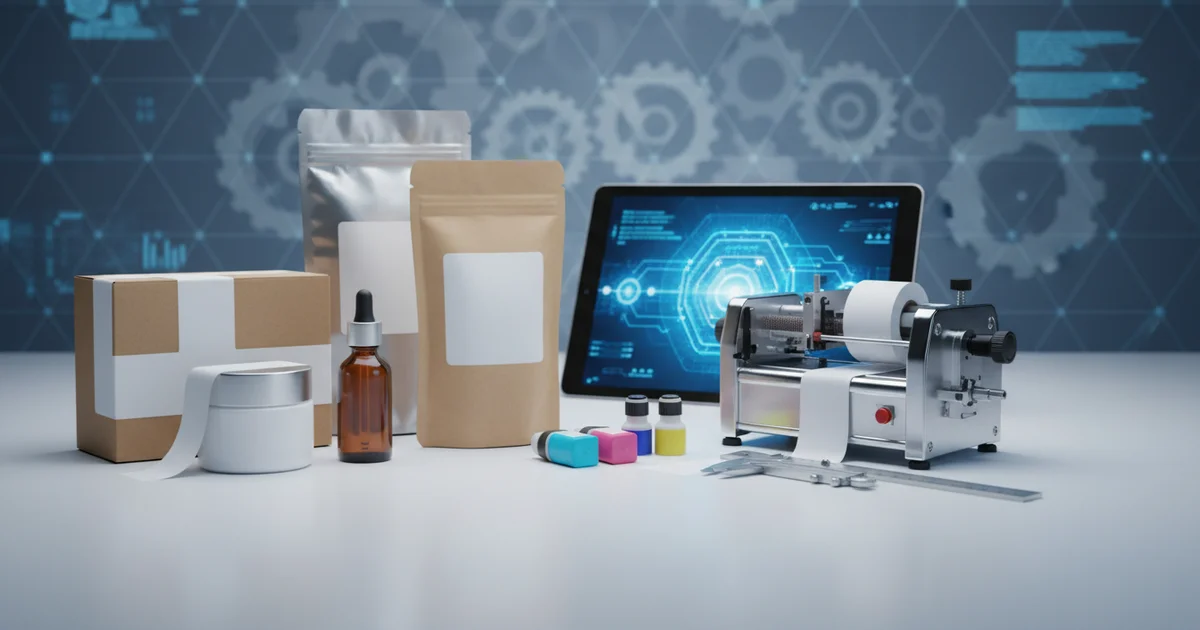
Selecting private label manufacturers requires verifying ISO 22716 certification for skin care, MOQs of 1,000–5,000 units, and in-house equipment like a Heidelberg press for <0.8% label defects. PLMA membership is a start, but audited standards and stability testing are non-negotiable for quality.
What separates a successful private label launch from a costly inventory mistake? The answer lies not just in selecting a manufacturer, but in understanding the specific capabilities, standards, and strategic alignment that define a true production partner. For brand owners, the choice of private label manufacturers is a critical path decision impacting cost, quality control capabilities, and market speed.
This guide provides a decision framework built from first-hand production experience, helping you navigate the landscape from generic suppliers to compliance-grade partners. For private label manufacturers applications, this is especially relevant. We'll focus on actionable criteria you can implement this quarter.
U.S. store brand sales in 2023, demonstrating massive market trust in private label quality.
The Strategic Value of Private Label Manufacturers
Private label manufacturing accelerates time-to-market and reduces capital risk by leveraging a partner's established infrastructure, regulatory compliance, and production expertise. It transforms fixed R&D and CapEx into variable operational costs.
From our work with brands scaling from DTC to retail, the core advantage is speed. A competent partner can take a approved formula or design and have production-ready samples in 3-5 weeks, versus 6-12 months for in-house facility setup. The detail most brands get wrong is underestimating the compliance burden. For example, a skin care line requires not just FDA registration but adherence to Good Manufacturing Practices (cGMP). A qualified private label manufacturers skin care partner will have this audit trail built into their process.
"The breakeven for building versus buying manufacturing capacity is typically around 500,000 annual units for a single SKU. Below that, the flexibility and lower fixed costs of a private label model almost always win." — Head of Operations, Mid-Sized CPG Brand
Strategically, this allows you to test markets with lower risk. For private label manufacturers applications, this is especially relevant. You can launch with a white-label program for 2,000 units, gather data, and then scale to 50,000 units with the same partner, all without re-qualifying the supply chain. The key is selecting a manufacturer whose growth capacity matches your roadmap.
Navigating Industry Standards: The Role of the Private Label Manufacturers Association
How can a brand quickly verify a manufacturer's credibility? Industry associations provide a critical filter. The Private Label Manufacturers Association (PLMA) is a pivotal entity, but its role is often misunderstood.
The PLMA serves as a trade organization connecting retailers and suppliers, with its annual trade show being a major sourcing event. Membership indicates market presence, but it is not a substitute for audited quality certifications like SQF or ISO.
In our experience vetting partners, a manufacturer's PLMA membership is a positive signal of commercial engagement, but it should be the start of your diligence, not the end. For private label manufacturers applications, this is especially relevant. The real value comes from the specific certifications they hold for your product category. For a food item, you need a manufacturer with SQF (Safe Quality Food) Level 2 or 3 certification. For cosmetics, ISO 22716 is the gold standard. These are audited, technical standards that guarantee process controls.
When evaluating a private label manufacturers association member, ask for their certification numbers and the scope of their audit. A common red flag is a manufacturer who claims "GMP-compliant" but cannot produce a current certificate from a recognized auditing body. Always verify directly with the certifier.
Specialized Sectors: Quality Benchmarks for Private Label Manufacturers Skin Care
What are the non-negotiable checks for a skin care or cosmetic partner? For private label manufacturers applications, this is especially relevant. This sector adds layers of regulatory and chemical complexity beyond general merchandise.
Top-tier private label skin care manufacturers must have ISO 22716 certification (Cosmetic GMP), in-house stability testing capabilities, and validated cleaning procedures for equipment between batches to prevent cross-contamination.
The most common mistake we see is brands prioritizing low unit cost over validated formulation. For private label manufacturers applications, this is especially relevant. A quality partner will provide a Certificate of Analysis (CoA) for every batch, showing assay results for active ingredients and microbiological safety. They should also conduct stability testing under ICH guidelines (25°C/60% RH for 3 months minimum) to guarantee shelf life. Without this, you risk product failure in the market.
Production Data: Label Rejection Rates by Process
| Printing Process | Typical Application | Average Defect Rate | Cost per 1k Labels (4-color, 3x5") |
|---|---|---|---|
| Digital (e.g., HP Indigo) | Short runs, variable data | 0.5–1.5% | $85–$120 |
| Flexographic | Medium-high volume, flexible packaging | 1.0–2.0% | $35–$65 |
| Offset (Heidelberg) | High-volume, premium packaging | 0.3–0.8% | $25–$50 |
Packaging is equally critical. For private label manufacturers applications, this is especially relevant. Skin care often uses premium finishes. Ensure your partner has the equipment for quality execution. For instance, a embossing label maker should be capable of producing a crisp, consistent blind emboss on a pressure-sensitive label without cracking the face material. At our facility, our Heidelberg 6-color offset press with inline coating is calibrated for cosmetic-grade color matching (Delta E < 2.0), which is essential for brand consistency across bottles, boxes, and cartons.
Need expert guidance on your next print project?
Get a Free Quote →The Manufacturing Toolkit: From Formulation to Finished Label
A manufacturer's equipment list is a tangible proxy for their capability and quality ceiling. For private label manufacturers applications, this is especially relevant. You should understand the key pieces that affect your product.
For the product itself: mixing tanks with sanitary fittings, filling lines with weight control checkers, and clean-room environments for sterile products. For private label manufacturers applications, this is especially relevant. For the packaging and labeling — our domain — the equipment dictates quality, speed, and cost. A modern label printing press is not a commodity. A high-speed 6-color rotary flexo press running at 120m/min can produce 50,000 labels in a shift with superior color consistency compared to a slower, older machine.
How to Vet a Manufacturer's Print Capability: 4-Step Checklist
- Ask for equipment models: Specifics matter. A "Heidelberg press" is good; a "Heidelberg Speedmaster XL 106 with inline spectrophotometer" is better — it confirms color automation.
- Request a pre-production proof: It should be a physical, G7-calibrated proof, not just a PDF. This tests their color management workflow.
- Inquire about inline finishing: Can they laminate, die-cut, and stack in one pass? This reduces handling and defect risk.
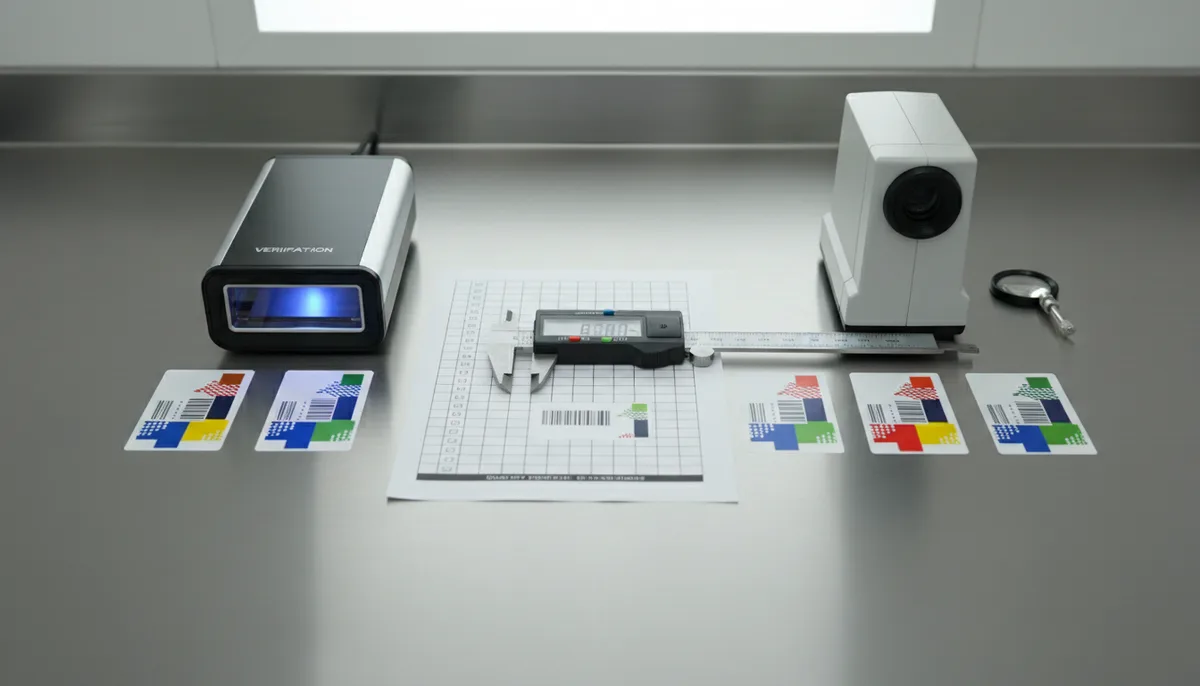
- Verify barcode validation: Their barcode label printer or press should include a verification scanner that grades each barcode to ANSI/ISO standards (Grade B or higher).
Specialized finishes like embossing or hot foil stamping require dedicated, well-maintained equipment. For private label manufacturers applications, this is especially relevant. An embossed label maker using a rotary die system will produce more consistent results than a flat-bed machine for long runs. The absence of this specific equipment often means the job is being subcontracted, adding time, cost, and quality variables.
"We audited a supplier who claimed in-house embossing. Their single antique press was down for maintenance 40% of the time, creating a bottleneck that delayed every order. Always ask for the equipment's operational uptime percentage." — David Chen, Technical Director, Print Engineering
A Decision Framework: Selecting Your Private Label Manufacturing Partner
With countless options, how do you systematically compare and choose? This framework moves beyond basic checklists to weighted criteria based on strategic goals.
The core trade-off is often between specialization and breadth. A manufacturer specializing only in liquids may offer superior efficiency and lower cost for that category but cannot bundle your liquid soap with its matching carton. A full-service provider with integrated printing, like our custom print production and packaging lines, offers supply chain simplicity and unified quality control but may have a higher minimum order quantity (MOQ).
Decision: Private Label vs. Contract Manufacturing
- If your need is a market-ready, standard formula/product with your branding → Choose private label manufacturers. You are buying from their existing catalog.
- If you require custom formulation, unique R&D, or patented processes → Choose contract manufacturing. You are paying for development.
- If you need moderate customization (e.g., scent, extract percentage) of an existing base → Many private label partners offer this; confirm the cost and MOQ for a "semi-custom" option.
Use a scored evaluation matrix. Assign points to: Certification & Compliance (30%), In-house Equipment & Capabilities (25%), Communication & Project Management (20%), Cost Structure & MOQ (15%), and Scalability & Lead Times (10%). Any partner scoring below 70% on the first two categories presents a high risk, regardless of attractive request a quote.
That said, this approach is not ideal for every scenario. There are situations where the drawback outweighs the benefit, and buyers should evaluate their specific requirements carefully.
Real-World Implementation: Launching a Skin Care Line with a Private Label Manufacturer
Let's apply the framework to a concrete scenario: launching a three-SKU facial serum line targeting retail & e-commerce in Q3 2026.
A successful launch requires a phased timeline: 4-6 weeks for partner selection and sampling, 2-3 weeks for regulatory and label copy review, 6-8 weeks for production of first run, and 2 weeks for shipping and fulfillment. Buffer an extra 2-3 weeks for unexpected delays.
The critical path item is often packaging. If your serum bottle requires a pressure-sensitive label with a tactile, embossed label maker finish and a scannable barcode, you must confirm the manufacturer can produce this in-house or has a vetted, co-located partner. Each hand-off between facilities adds a week and a defect opportunity. In our operation, we run the label printing press (our high-speed rotary) in the same facility where we manage final assembly, allowing for real-time quality checks.
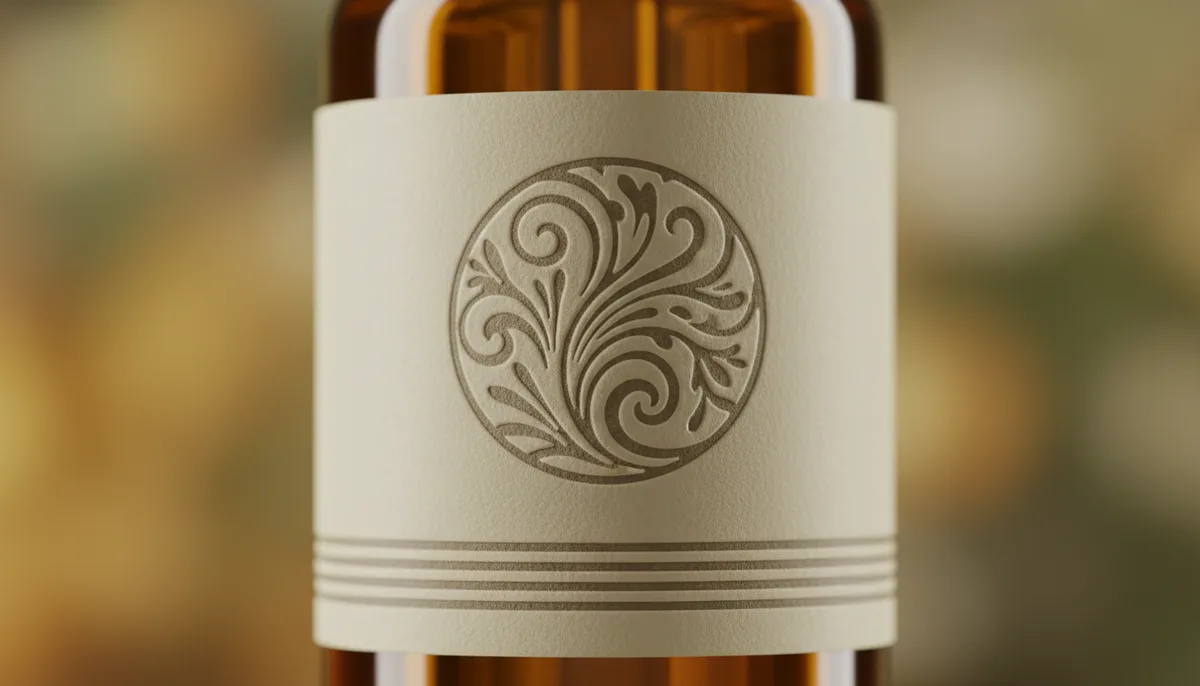
Budget with precision. For a run of 5,000 units per SKU, typical costs break down as: Product Formulation & Filling (50-60%), Primary Packaging (bottles/droppers: 20-30%), Labels & Secondary Packaging (10-15%), and Compliance/Testing (5-10%). Never let the label be an afterthought; a poorly printed or non-compliant label (e.g., with a smudged barcode) can halt entire shipments at a distributor's warehouse.
The landscape for private label manufacturers is evolving toward greater integration and transparency. The winning partners in 2026 will be those who offer not just production, but data-driven insights, sustainable options, and seamless digital workflows from order to delivery. By applying this rigorous, experience-based framework, you can select a partner that de-risks your launch and builds a foundation for scalable brand growth.
Frequently Asked Questions
How does a manufacturer's in-house label printing press capability affect lead times?
In-house printing eliminates subcontractor hand-offs, reducing lead times by 1-2 weeks per order. For example, a manufacturer with a Heidelberg Speedmaster XL 106 press can produce 50,000 cosmetic-grade labels in a single shift with a defect rate under 0.8%, ensuring faster, more reliable turnaround versus outsourcing.
What is the typical cost breakdown when working with private label manufacturers for skin care?
For a 5,000-unit skin care run, costs typically break down as: Formulation & Filling (50-60%), Primary Packaging like bottles (20-30%), Labels & Secondary Packaging (10-15%), and Compliance/Testing such as ICH stability studies (5-10%). Always budget for ISO 22716-certified production to avoid costly quality failures.
How do MOQs from private label manufacturers impact cash flow for new brands?
MOQs of 1,000–5,000 units per SKU tie up significant capital. For a new brand, launching with a 2,000-unit white-label program requires less upfront cash than a 50,000-unit custom run. The breakeven for building in-house capacity is around 500,000 annual units; below that, private label models preserve cash flow.
What should be included in a quality audit checklist for a private label manufacturers association member?
Beyond PLMA membership, demand current certification numbers for ISO 22716 (cosmetics) or SQF Level 2/3 (food). Verify in-house equipment like a barcode label printer with ANSI/ISO Grade B validation and check for documented cleaning procedures to prevent cross-contamination. Always request batch-specific Certificates of Analysis.
When does contract manufacturing become more cost-effective than private label?
Contract manufacturing is for custom R&D and patented processes. Private label is for market-ready products. Economically, if you need unique formulation beyond scent or extract adjustments, or if annual volumes exceed 500,000 units per SKU, contract manufacturing may justify its higher development costs.