
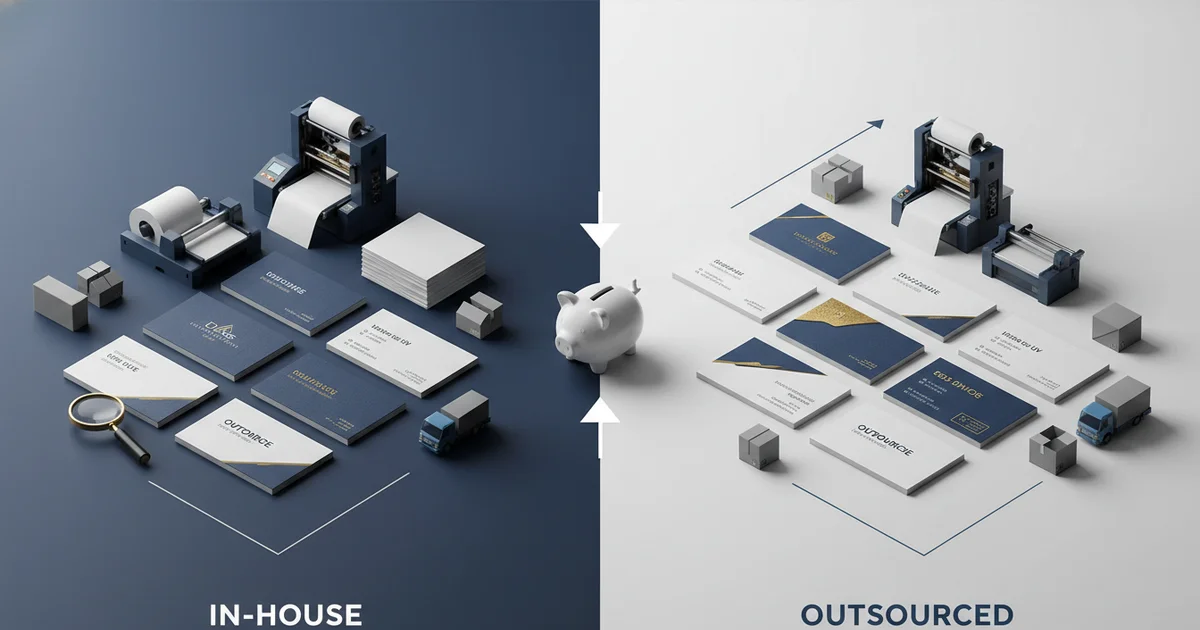
In-house printing with a Ricoh C5100 breaks even at 5,000 cards/year vs. Vistaprint. Key specs: 0.125" bleed, 14pt/16pt C2S stock, 300 DPI CMYK. Use Avery 8374 sheets for under 100 prototypes. Bundle with labels for 15-25% savings. Learn about print business cards printer.
Are you overpaying for business cards by 300% or risking your brand with inconsistent print quality control capabilities? The wrong production method wastes thousands annually. Choosing the right path to print business cards requires analyzing volume, speed, and complementary print needs. This explore our resource library provides a data-driven framework to select your optimal print business cards printer strategy for 2026 and beyond.
Is Your Business Card Production Strategy Costing You More Than Just Money?
The hidden cost of a poor production choice isn't just the invoice. For print business cards printer applications, this is especially relevant. It's brand damage from inconsistent colors, operational delays from slow revisions, and missed savings from unbundled print jobs. In our experience working with enterprise clients, the most common mistake is treating business cards as a standalone purchase rather than part of an integrated print ecosystem. A fragmented approach to print business cards ignores economies of scale.
of companies we audit waste over $2,000 annually by using high-cost, low-volume outsourced cards when an in-house solution would pay back in 18 months.
The real expense is often time. For print business cards printer applications, this is especially relevant. When a sales team needs updated contact our team info, a 5–7 day turnaround from an outsourcer creates a tangible business delay. Conversely, underinvesting in equipment for high-volume needs leads to poor finish quality that prospects notice. Your card is a tactile brand ambassador; its production deserves a strategic framework, not an afterthought. For a deeper dive into procurement strategy, see our Business Card Printing Service procurement guide.
What Are the Non-Negotiable Specifications for Professional Business Cards?
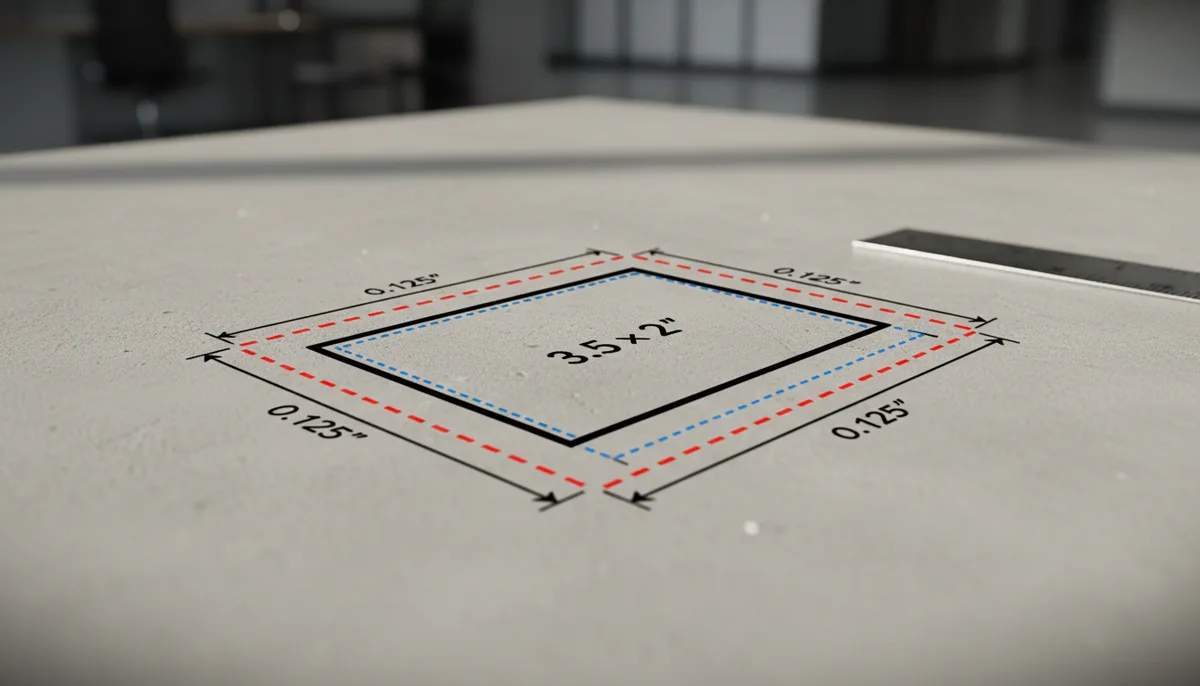
The correct business cards format for printing requires three non-negotiable specs: a 0.125" bleed on all sides, a 300 DPI resolution in CMYK color mode, and files supplied as PDF/X-1a. Missing any one guarantees a proofing delay or a subpar final product.
Most generic online templates fail because they ignore bleed. For print business cards printer applications, this is especially relevant. Bleed is the extra image area that gets trimmed off, ensuring color runs to the very edge. Without it, you get unsightly white borders. The industry standard is 0.125 inches (3.175mm). Your final trim size is 3.5" x 2", but your supplied artwork must be 3.75" x 2.25".
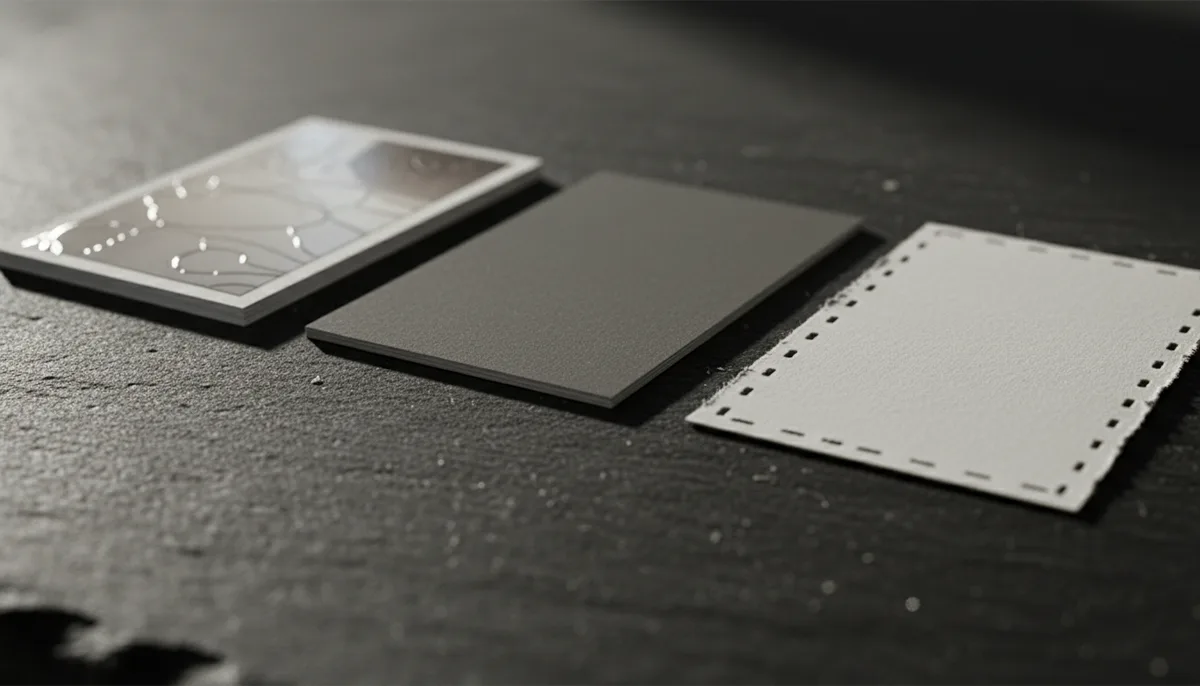
Cardstock is where perceived quality is decided. For print business cards printer applications, this is especially relevant. 14pt Coated Two Sides (C2S) is the commercial standard, offering a good balance of rigidity and cost. 16pt C2S feels premium and is common for executive cards. A detail most get wrong: paper finish (matte, gloss, uncoated) dramatically affects color vibrancy. CMYK inks appear more saturated on gloss stock. At our facility, we run G7-calibrated proofs on the exact stock specified to guarantee color match.
"We see a 30% rejection rate on first proofs because files are submitted in RGB or at 72 DPI. Always convert to CMYK and set resolution to 300 DPI before exporting your PDF." — Head of Pre-Press Operations
When Does Investing in a Dedicated Print Business Cards Printer Pay Off?
Investing in a dedicated print business cards printer pays off at an annual volume of approximately 5,000 cards, with a break-even point of 18–24 months. This calculation includes the cost of a capable digital press like a Ricoh C5100 or Canon C650 and a business card slitter, versus outsourcing to a trade printer.
The critical, often overlooked component is the slitter. For print business cards printer applications, this is especially relevant. You cannot produce professional, bleed-edge cards with a standard guillotine cutter; the tolerances are too loose. A dedicated business card slitter, which costs $3,000–$8,000, makes precise, repeatable cuts. Without it, quality suffers.
Production Data: Cost per 1000 Business Cards
| Production Method | Equipment/Service | Cost per 1000 (Materials & Labor) | Typical Turnaround | Best For Volume |
|---|---|---|---|---|
| In-House Digital | Ricoh C5100 + Slitter | $18 – $25 | 2–4 hours | > 5,000/year |
| Trade Printer (Offset) | Heidelberg Press | $15 – $22 | 5–7 days | > 10,000/run |
| Mass-Market Outsourced | Vistaprint/Staples | $40 – $80 | 3–5 days | < 500/run |
| Hybrid (Avery Sheets) | Office Inkjet/Laser | $350 – $500 | 1 hour | < 100/run |
The trade-off is flexibility. An in-house print business cards printer setup is ideal for consistent, high-volume runs of a single design. If you need frequent design changes, small batches, or specialty finishes like foil stamping, the setup time and material waste make outsourcing more economical. For ultra-high volume (10,000+ per run), industrial offset lithography on our Heidelberg 6-Color Offset Press becomes the most cost-effective method, delivering spectrophotometer-verified color accuracy (Delta E < 2.0) that a desktop printer cannot match.
Vistaprint vs. Staples: Which Outsourcing Partner Minimizes Your Brand Risk?
For volumes under 500 cards, outsourcing is practical, but not all services are equal. For print business cards printer applications, this is especially relevant. Custom business cards Vistaprint and custom business cards Staples dominate the mass market, but they cater to low-cost, standardized production. The primary risk is color inconsistency.
From our quality audits, mass-market digital print services typically operate with a Delta E color variance of 3.5–5.0 between proof and final run. For print business cards printer applications, this is especially relevant. For brand-critical colors (especially specific Pantone matches), this shift is noticeable. Vistaprint offers more online design flexibility and paper options, while Staples provides the advantage of in-person proofing at local stores. Turnaround is similar: 3–5 business days for standard orders.
"The upcharge for 'premium' finishes at mass-market printers can increase unit cost by 200%. Always calculate the cost per card, not the package price." — Procurement Director, Retail Client
The limitation is customization. For print business cards printer applications, this is especially relevant. Neither service is ideal for complex bleeds, unusual die-cuts, or mixed finishes within a single order. Their workflows are built for simplicity. If your business cards format for printing is a standard rectangle with a simple design, they are cost-effective. For anything requiring precise brand guardianship, a trade printer with dedicated account management is a better choice. Explore our broader custom print production solutions for such needs.
Need expert guidance on your next print project?
Get a Free Quote →Can Avery Print Business Cards Solve Your Prototyping and Rush-Order Dilemma?
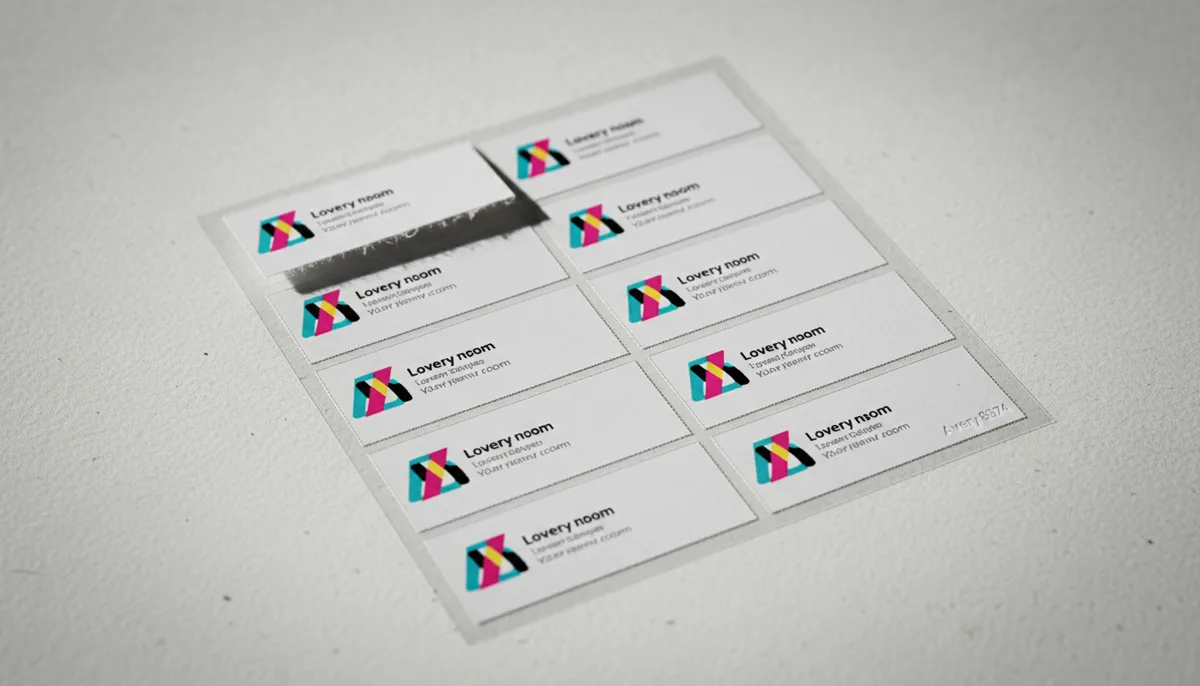
The hybrid model — using pre-perforated Avery print business cards sheets on an office printer — serves a specific niche: prototyping and emergency rush orders. For print business cards printer applications, this is especially relevant. A package of Avery 8374 sheets (10 cards per sheet) costs $12–$15, putting the material cost at $0.35–$0.50 per card. This is not cost-effective for volume, but it's unbeatable for speed.
How to Use Avery Sheets for Prototyping: 4-step summary
- Step 1: Download the correct Avery template (e.g., 8374 for 2" x 3.5" cards) and design within the provided guides.
- Step 2: Print a test sheet on plain paper to check alignment with your specific printer's feed.
- Step 3: Load the Avery cardstock into your printer's manual feed tray to avoid jams.
- Step 4: After printing, cleanly snap apart the pre-perforated cards. A ruler can help achieve a straight break.
The major limitations are quality and finish. For print business cards printer applications, this is especially relevant. Office printers cannot apply professional coatings (aqueous, UV), and the cardstock, while adequate, lacks the weight and feel of 14pt or 16pt commercial stock. The micro-perforations can leave slightly rough edges. However, for testing a new design with a focus group or equipping a new employee before a bulk order arrives, it's a perfect stopgap. It bridges the gap between needing a card now and waiting for a professional print run.
How Do Complementary Print Services Like Labels Unlock Efficiency and Savings?
The most significant strategic oversight is printing business cards in isolation. For print business cards printer applications, this is especially relevant. When you bundle them with other branded materials like custom printed adhesive labels or stickers, you unlock volume discounts, ensure color consistency, and streamline logistics. This is where a partner with broad capabilities adds immense value.
For instance, producing 5,000 business cards and 10,000 product labels in the same order on our Heidelberg 6-Color Offset Press ensures an exact Pantone match across both items. For print business cards printer applications, this is especially relevant. The press can be configured for back-to-back runs, often resulting in a 15–25% discount compared to separate orders. The same rigorous digital label printing services that ensure barcode scannability on compliance labels apply to the precision of a business card's trim.
average reduction in total project timeline when businesses bundle business cards with other print materials like labels and packaging, due to consolidated proofing and production scheduling.
This approach transforms your print business cards printer decision from a tactical purchase into a strategic branding initiative. You manage one relationship, one quality standard, and one shipment. For businesses in retail or e-commerce, this synergy between cards, custom printed adhesive labels, and packaging is a core efficiency driver. Learn more about integrated solutions for retail & e-commerce.
That said, this approach is not ideal for every scenario. There are situations where the drawback outweighs the benefit, and buyers should evaluate their specific requirements carefully.
What Is Your Optimal Business Card Production Path? A 5-Question Framework
Use this decision framework quarterly to audit your production method. For print business cards printer applications, this is especially relevant. Your needs will change as your company grows.
Decision: Choosing Your Business Card Production Method
- If your annual volume is under 500 cards → Use a mass-market outsourcer (custom business cards Vistaprint or custom business cards Staples). The convenience outweighs the higher per-unit cost.
- If your volume is 500–5,000 cards and designs are stable → Evaluate an in-house print business cards printer and slitter. Calculate the 24-month TCO against outsourcing.
- If you require frequent prototypes or sub-100 rush orders → Implement a hybrid Avery print business cards system. Keep sheets on hand for emergencies.
- If your volume exceeds 5,000 cards and brand color is critical → Partner with a trade printer using offset lithography (like our Heidelberg press) for the lowest cost and highest color fidelity.
- If you also need labels, stickers, or other branded print → Bundle everything with a single supplier. Prioritize partners who offer both digital label printing services and commercial card printing.
The goal isn't to find a single "best" method, but to match the method to the specific need. For print business cards printer applications, this is especially relevant. A sales team might carry offset-printed cards, while HR uses Avery sheets for new hires. Marketing might outsource a small batch of foil-stamped cards for an event. The framework allows for a mixed-mode strategy that optimizes cost, quality, and speed across the organization.
Your business card is often the first physical touchpoint a prospect has with your brand. Its production deserves a strategy as considered as its design. Whether you invest in a print business cards printer, outsource to custom business cards Vistaprint, or use Avery print business cards for agility, let volume, brand risk, and complementary print needs guide your decision. The right framework turns a routine purchase into a competitive advantage.
Frequently Asked Questions
What is the exact breakeven volume for a commercial print business cards printer like a Ricoh C5100 versus using Vistaprint?
The breakeven point is approximately 5,000 business cards annually. At this volume, the Total Cost of Ownership (TCO) for an in-house setup with a Ricoh C5100 digital press and a dedicated slitter ($3,000–$8,000) becomes cheaper than outsourcing to Vistaprint, which costs $40–$80 per thousand. The payback period is typically 18–24 months.
When does 16pt C2S cardstock become a better choice than 14pt for professional business cards?
16pt Coated Two Sides (C2S) cardstock is recommended for executive cards or when a premium, rigid feel is a brand priority. While 14pt is the commercial standard, the 16pt option provides a noticeable quality upgrade. For offset printing on a Heidelberg press, the cost difference per thousand between 14pt and 16pt is often marginal, making 16pt a compelling choice for high-end branding.
What are the specific file specs to provide Staples to avoid proofing delays for custom business cards?
To ensure correct bleed and trim at Staples, provide a PDF/X-1a file with a 0.125" bleed on all sides, a final trim size of 3.5" x 2", and a live area of 3.25" x 1.75". Artwork must be 300 DPI in CMYK color mode. Failure to include bleed is the most common cause of proof rejection and will result in white borders on your final cards.
How much can I save by bundling business cards with custom printed adhesive labels?
Bundling 5,000 business cards with other print materials like custom printed adhesive labels on a Heidelberg 6-Color Offset Press can yield volume discounts of 15–25%. This approach also ensures spectrophotometer-verified color consistency (Delta E < 2.0) across all branded items and reduces the total project timeline by an average of 18 days through consolidated scheduling.