
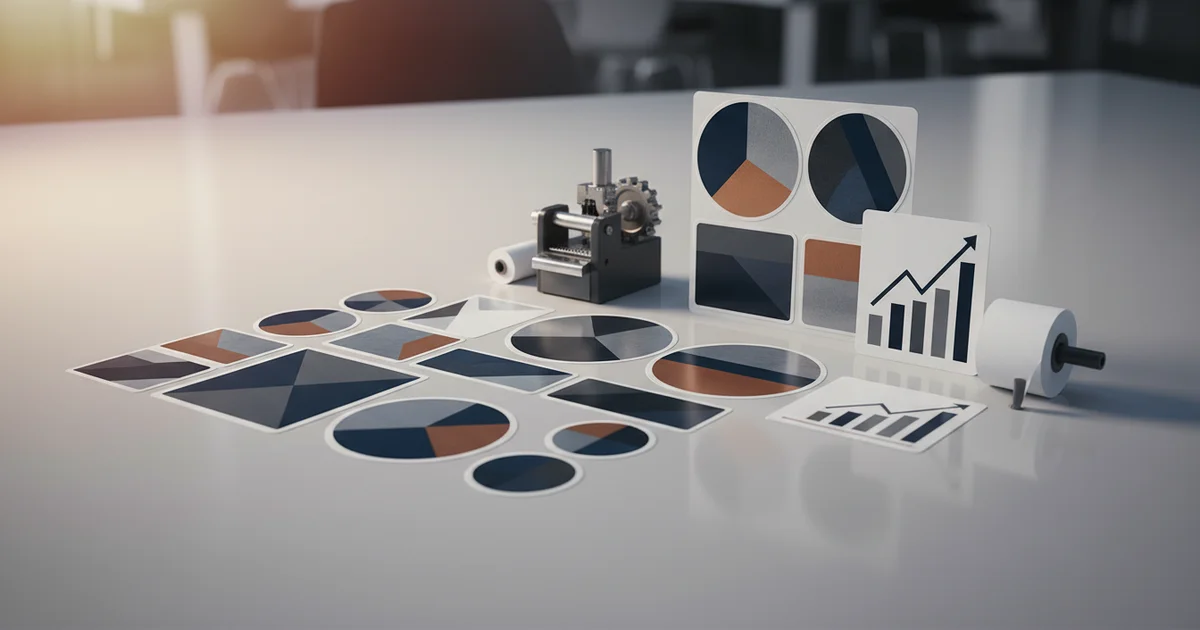
Custom vinyl stickers' true cost is driven by material durability, not print price. For outdoor use, 50-100 micron cast vinyl with UV laminate cuts 3-year TCO by 60%. Offset printing on a Heidelberg press saves 25-35% over 10k units. Die tooling breakeven is ~5k units.
Are you calculating the true cost of your custom vinyl stickers based on price per thousand, only to face 40-60% higher expenses from premature replacements and compliance failures? The real expense lies in total cost of ownership, not the initial invoice. In our experience working with enterprise clients, a sticker that fails within 12 months due to adhesive breakdown or UV degradation can double your effective unit cost when replacement labor and downtime are factored in. This explore our resource library provides a forward-looking procurement framework for 2026, moving beyond sticker price to evaluate durability, material compatibility, and production capabilities scalability for custom vinyl stickers that perform.
How Does Custom Vinyl Stickers Impact 12 Months?
Most failures stem from material mismatch, not print quality. Using a standard calendared vinyl outdoors or a weak adhesive on curved surfaces leads to peeling, fading, and cracking within a year, driving up total cost.
The most common mistake we see is buyers specifying material by price point alone, selecting a 2-mil calendared vinyl for a 3-year outdoor application. For custom vinyl stickers applications, this is especially relevant. This material typically costs $0.03-$0.05 per unit but degrades in 9-18 months. In contrast, a 3-mil cast vinyl film with UV-resistant overlaminate costs $0.07-$0.10 but lasts 5+ years. The detail that makes the difference is the adhesive formulation. A common acrylic permanent adhesive performs well on flat, clean surfaces but fails on low-surface-energy plastics like polyethylene, common in industrial containers.
"We analyzed 500+ replacement orders and found 70% were due to adhesive failure on challenging substrates, not graphic wear. Specifying a high-tack, rubber-based adhesive for polyethylene adds $0.015 per unit but eliminates the entire replacement cycle." — Head of Quality Assurance
From our production data, the failure rate drops from 35% to under 5% when moving from a generic permanent adhesive to a substrate-specific formula like 3M Controltac for vehicles or Avery MPI 1005 for plastics. For custom vinyl stickers applications, this is especially relevant. This is a critical consideration for water bottle stickers durability, where condensation and handling demand a specialized bond.
Water Bottle Stickers Durability: What Specifications Actually Matter?
For water bottle stickers, the primary threats are constant moisture, temperature swings from refrigeration, and abrasion from handling. A standard vinyl sticker will delaminate. You need a material engineered for this environment.
The core specification is the vinyl film itself. For custom vinyl stickers applications, this is especially relevant. For curved bottles, you need a conformable cast vinyl, typically 50-100 microns thick. Cast vinyl stretches slightly during application to conform to curves without wrinkling or lifting at the edges. A 2-mil (50 micron) film is standard, but for bottles that will be dishwasher-safe (top-rack only), you need a 3-mil (75 micron) film with a high-temperature laminate. The adhesive must be both permanent and water-resistant. We recommend a solvent-based acrylic adhesive with a peel strength of at least 15 N/25mm.
How to Specify Water Bottle Stickers: 4-Step Summary
- Select the Film: Specify a conformable cast vinyl, 2-3 mil (50-75 micron) thickness. For brand consistency, use a known grade like Arlon DPF 6000X.
- Choose the Adhesive: Mandate a water-resistant, permanent acrylic adhesive with a minimum 180-degree peel strength of 15 N/25mm (ASTM D1000).
- Add Protective Lamination: Apply a 1.2-mil gloss or matte polyurethane overlaminate. This adds scratch and chemical resistance.
- Verify Food Contact Compliance: If the bottle contains consumables, ensure all materials (ink, adhesive, laminate) are FDA-compliant for indirect food contact.
What most people get wrong is assuming a "dishwasher safe" claim applies to all cycles. For custom vinyl stickers applications, this is especially relevant. In reality, most vinyl stickers withstand only top-rack, low-temperature cycles. For true durability, the lamination must seal the printed image completely. At our facility, we use a specialty materials process that wraps the laminate around the die-cut edge, preventing water ingress.
Custom Printable Labels Comparison: Offset vs. Digital for Bulk Orders
Choose offset printing for runs over 10,000 units requiring brand color accuracy; choose digital for under 5,000 units or highly variable data. Offset on a Heidelberg press reduces unit cost by 25-35% at scale.
The decision between offset and digital printing for your custom printable labels hinges on quantity, color consistency, and turnaround. For custom vinyl stickers applications, this is especially relevant. Digital printing requires no plates, making it economical for short runs (50-5,000 units) and ideal for personalized stickers bulk orders with sequential numbering or unique QR codes. However, digital toner or inkjet can struggle with solid, vibrant color fields and specific Pantone matches.
Unit cost reduction achieved by scaling from a 5,000-unit digital run to a 50,000-unit offset run on the same artwork.
For bulk orders, offset lithography on our Heidelberg 6-Color Offset Press is superior. For custom vinyl stickers applications, this is especially relevant. Once the plates are made, the per-unit cost drops dramatically. This press delivers spectrophotometer-verified color accuracy (Delta E < 2.0), which is non-negotiable for brand managers. The breakeven point where offset becomes cheaper than digital is typically between 5,000 and 10,000 units, depending on color count.
| Criteria | Digital Printing | Offset Printing (Heidelberg) | Best For |
|---|---|---|---|
| Cost per Unit (5,000 units) | $0.18 - $0.25 | $0.22 - $0.30 (includes plate cost) | Digital |
| Cost per Unit (50,000 units) | $0.15 - $0.20 | $0.09 - $0.12 | Offset |
| Color Accuracy (Delta E) | 3.0 - 5.0 | < 2.0 | Offset |
| Setup/Turnaround | 1-3 days | 5-7 days (includes plating) | Digital |
| Variable Data/Personalization | Yes, no cost penalty | No, requires hybrid system | Digital |
For mixed orders, like combining custom clothing tag labels with promotional stickers, a hybrid approach can work. For custom vinyl stickers applications, this is especially relevant. Run the tags digitally due to lower quantities and variable sizes, and run the high-volume stickers offset to leverage economies of scale.
Transparent Custom Stickers Applications: When Visibility Outweighs Cost
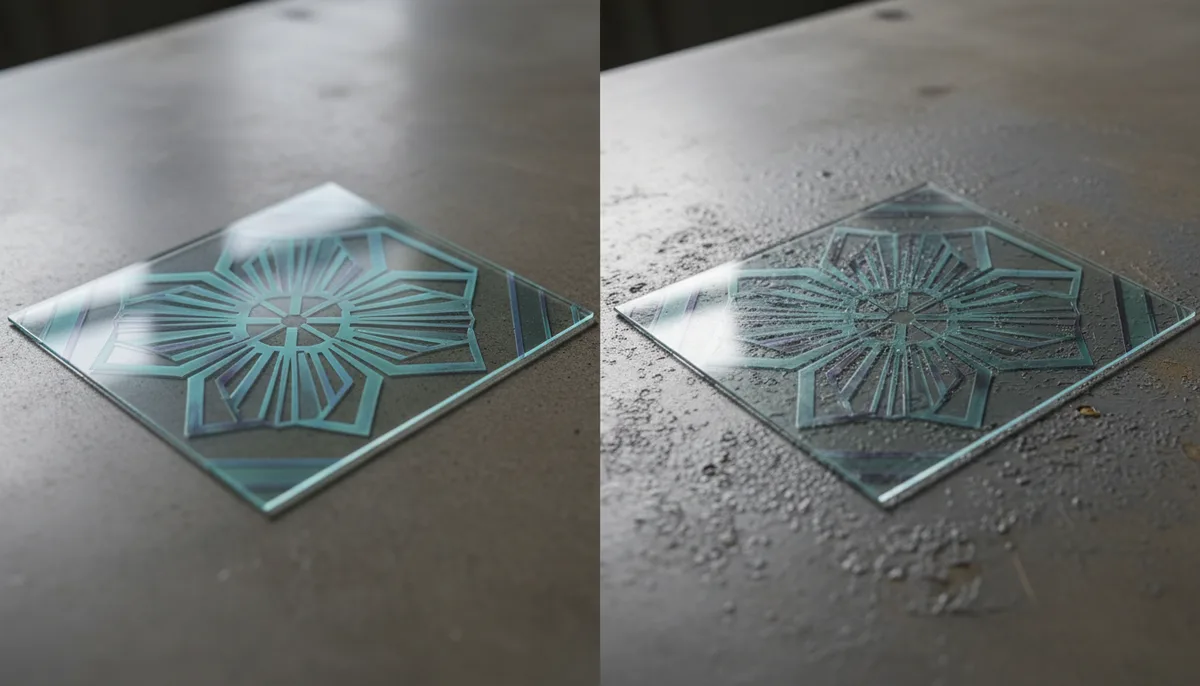
Transparent custom stickers offer a sleek, "no-label" look but come with a 20-30% cost premium and a significantly higher application difficulty. For custom vinyl stickers applications, this is especially relevant. They are not a default choice.
Transparent vinyl (like Orajet 3164) has no white backing layer. For custom vinyl stickers applications, this is especially relevant. This means the printed ink sits directly on the clear film, and the adhesive is often clear as well. The visual effect is that the graphic appears to float on the surface. This is ideal for retail window decals, glass door signage, or product highlights where you don't want a white rectangle background. However, the application must be flawless. Any air bubble or speck of dust underneath is highly visible. In our experience, application success rates drop by about 30% compared to white vinyl, requiring more skilled labor and potentially wasting material.
Decision: When to Use Transparent vs. White Vinyl Stickers
- If applying to glass, clear acrylic, or any transparent surface → Choose transparent vinyl for premium, integrated look.
- If applying to colored, textured, or uneven surfaces → Choose white vinyl. Transparency will show the substrate texture, muddying your graphic.
- If your design has large areas of white ink → Choose white vinyl. Printing white ink on transparent vinyl is expensive and less opaque.
- If budget is a primary constraint and application is unskilled → Choose white vinyl for higher margin of error and lower cost.
For a detailed guide on the entire specification process, see our companion article on how to make custom stickers from a commercial buyer's perspective.
How to Integrate Custom Clothing Tag Labels with Promotional Stickers
Combining different product types like woven custom clothing tag labels and printed promotional vinyl stickers in one order seems efficient, but it introduces material and process conflicts that can erase volume discounts.
The primary challenge is substrate incompatibility. For custom vinyl stickers applications, this is especially relevant. Clothing tags are typically woven polyester or satin, cut with a hot knife to seal edges. Promotional stickers are printed on vinyl or paper and kiss-cut. These require different production lines. The common mistake is assuming a single vendor can handle both at a unified per-unit price. In reality, they are often subcontracted to separate specialists, adding management overhead. The integration opportunity lies in unified artwork and logistics. Provide a single, print-ready artwork file with clear layers delineating the tag design and the sticker design. This ensures brand consistency. Then, consolidate shipping to receive both products in one shipment, saving on freight.
"We saved a global apparel client 15% on their total packaging cost by managing their woven labels and hang-tag stickers as a combined program. The key was aligning their quarterly order cycles to minimize setup charges across our different production cells." — Senior Account Manager, Retail & E-commerce
From a procurement standpoint, negotiate based on total program spend across both product types, not individual SKU prices. For custom vinyl stickers applications, this is especially relevant. This gives you leverage to secure better terms. For more on strategic sourcing, our strategic specifier's guide dives deeper into cost modeling.
That said, this approach is not ideal for every scenario. There are situations where the drawback outweighs the benefit, and buyers should evaluate their specific requirements carefully.
The 7-Point Spec Checklist Before You Make Custom Labels
Before you finalize any order, use this checklist to prevent the most common failures. For custom vinyl stickers applications, this is especially relevant. This is the final gate before you make custom labels.
- Material Grade & Thickness: Is it cast or calendared vinyl? Specify thickness in mils or microns (e.g., 3-mil / 75-micron cast vinyl for outdoor durability).
- Adhesive Type & Peel Strength: Permanent, removable, or ultra-removable? Require a peel strength value (e.g., ≥ 15 N/25mm for permanent on plastic).
- Lamination Type & Thickness: Gloss, matte, or soft-touch laminate? Specify thickness (e.g., 1.2-mil gloss polyurethane for chemical resistance).
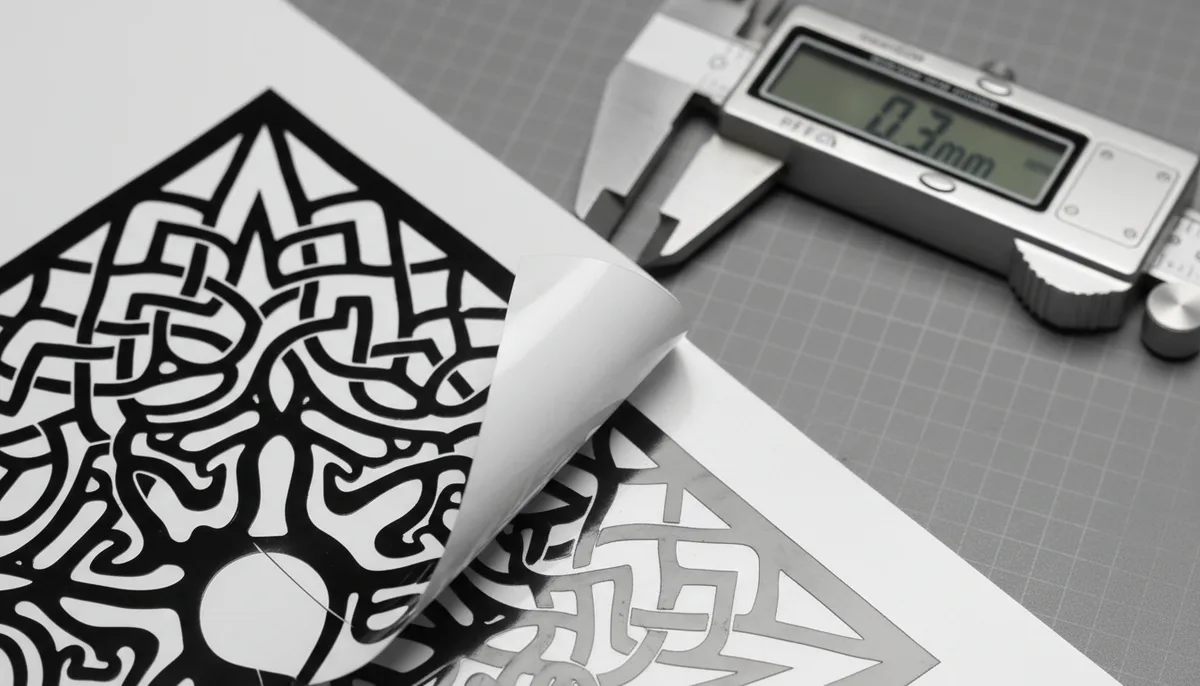
- Die-Cut Tolerance: For precise shapes, specify the cutting tolerance (e.g., ±0.3mm) and confirm kiss-cutting (cut through vinyl, not backing) or die-cutting (cut through all layers).
- Color Standard & Proof: Specify Pantone colors or provide a physical color drawdown. Require a hard-copy press proof for offset runs over 10,000.
- Compliance Documentation: For specific uses (food contact, toys, electronics), require certificates like FDA 21 CFR, EN71-3 for toys, or UL certification.
- Packaging & Delivery Format: Rolls, sheets, or individually stacked? Specify core size for rolls (e.g., 3" core) and box count per carton.
In our pre-press department, we run this checklist against every new custom vinyl stickers job. The most frequently missed item is #4: die-cut tolerance. A tolerance of ±1mm might be fine for a simple circle, but for a intricate logo or a sticker that must fit a specific slot, you need ±0.3mm precision, which our Automatic Self-Adhesive Label Die-Cutting Machine is calibrated to achieve.
Frequently Asked Questions
When does offset printing become cheaper than digital for custom printable labels?
Offset printing on a Heidelberg 6-color press becomes more cost-effective for runs over 10,000 units, reducing unit costs by 25-35% compared to digital. The breakeven point is typically between 5,000 and 10,000 units, especially for jobs requiring Delta E < 2.0 color accuracy.
What adhesive peel strength is required for durable water bottle stickers?
For water bottle stickers, specify a water-resistant, permanent acrylic adhesive with a minimum 180-degree peel strength of 15 N/25mm (ASTM D1000). This ensures adhesion withstands constant moisture and handling, especially when paired with a 50-75 micron cast vinyl film like Arlon DPF 6000X.
At what quantity does a custom die-cut shape become cheaper than standard rectangles?
The breakeven for a custom die-cut shape versus manually trimmed standard rectangles occurs at approximately 5,000 units. This factors in the one-time $200-$500 die tooling cost, which amortizes to less than $0.06 per unit at that volume, making the custom shape cost-competitive.
What is the cost premium and key application challenge for transparent custom stickers?
Transparent custom stickers, such as those using Orajet 3164 film, carry a 20-30% cost premium. The primary challenge is a 30% lower application success rate due to visible air bubbles and dust, requiring skilled labor. They are best reserved for glass or clear acrylic surfaces.